 ChipApex | Global Electronic Components Supplier
SEARCH
Search Product
Search Post
— IC芯片 | 连接器 | 传感器 | 被动器件 —
Search productSearch post
— IC芯片 | 连接器 | 传感器 | 被动器件 —
Consult the customer manager about the wholesale price.
consultation hotline:86-132-6715-2157
email:[email protected]
Contact the product manager for consultation. One-stop consultation is available.
Do you want a lower wholesale price? Please send us your inquiry and we will reply immediately.
The DRV8231DSGR is an integrated N-channel H-bridge brushed DC motor driver manufactured by Texas Instruments. It operates within a supply voltage range of 4.5 V to 33 V and delivers a peak output current capability of 3.7 A. The device incorporates a charge pump to support N-channel MOSFET half-bridges and enable 100% duty-cycle driving for improved efficiency. Key electrical parameters include a maximum on-resistance of 600 mΩ, logic input compatibility with 1.8 V, 3.3 V, and 5 V signals, and a low-power sleep mode consuming less than 1 µA at 24 V. It is housed in an 8-pin WSON package with a PowerPAD thermal pad.
Verify the specific suffix against official Texas Instruments documentation to confirm pin-to-pin compatibility and functional variants. Ensure the selected variant matches the required current sensing method, whether using an external shunt resistor or an integrated current mirror. Confirm package integrity and RoHS compliance status prior to integration into final designs.
Select the DRV8231DSGR when designing systems requiring a compact, high-efficiency solution for brushed DC motors operating up to 33 V. Choose this component for applications demanding precise current regulation and stall detection capabilities. Consider the integrated thermal management features and small footprint when space-constrained PCB layouts are necessary for medical or industrial automation devices.
This component belongs to the DRV8231 family of integrated motor drivers designed for scalable power solutions. The series offers pin-to-pin compatibility across various R_DS(on) and voltage ratings, allowing designers to adapt designs with minimal changes. It complements other TI motor drivers like the DRV8870 and DRV8251 by providing a balanced option for mid-range voltage and current requirements in automated systems.
Official pin-to-pin alternatives within the same family include the DRV8231A, which utilizes an integrated current mirror instead of an external shunt resistor. Designers should verify that the substitute part meets the specific current sensing architecture requirements of the existing circuit design.
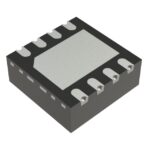 DRV8231DSGR
The activity of extra discounts on wholesale prices is in full swing…
Please fill in your contact information and we will send you the latest wholesale price list.





