ChipApex | Global Electronic Components Supplier
SEARCH
Search Product
Search Post
— IC芯片 | 连接器 | 传感器 | 被动器件 —
Search productSearch post
— IC芯片 | 连接器 | 传感器 | 被动器件 —
Consult the customer manager about the wholesale price.
consultation hotline:86-132-6715-2157
email:[email protected]
Contact the product manager for consultation. One-stop consultation is available.
Do you want a lower wholesale price? Please send us your inquiry and we will reply immediately.
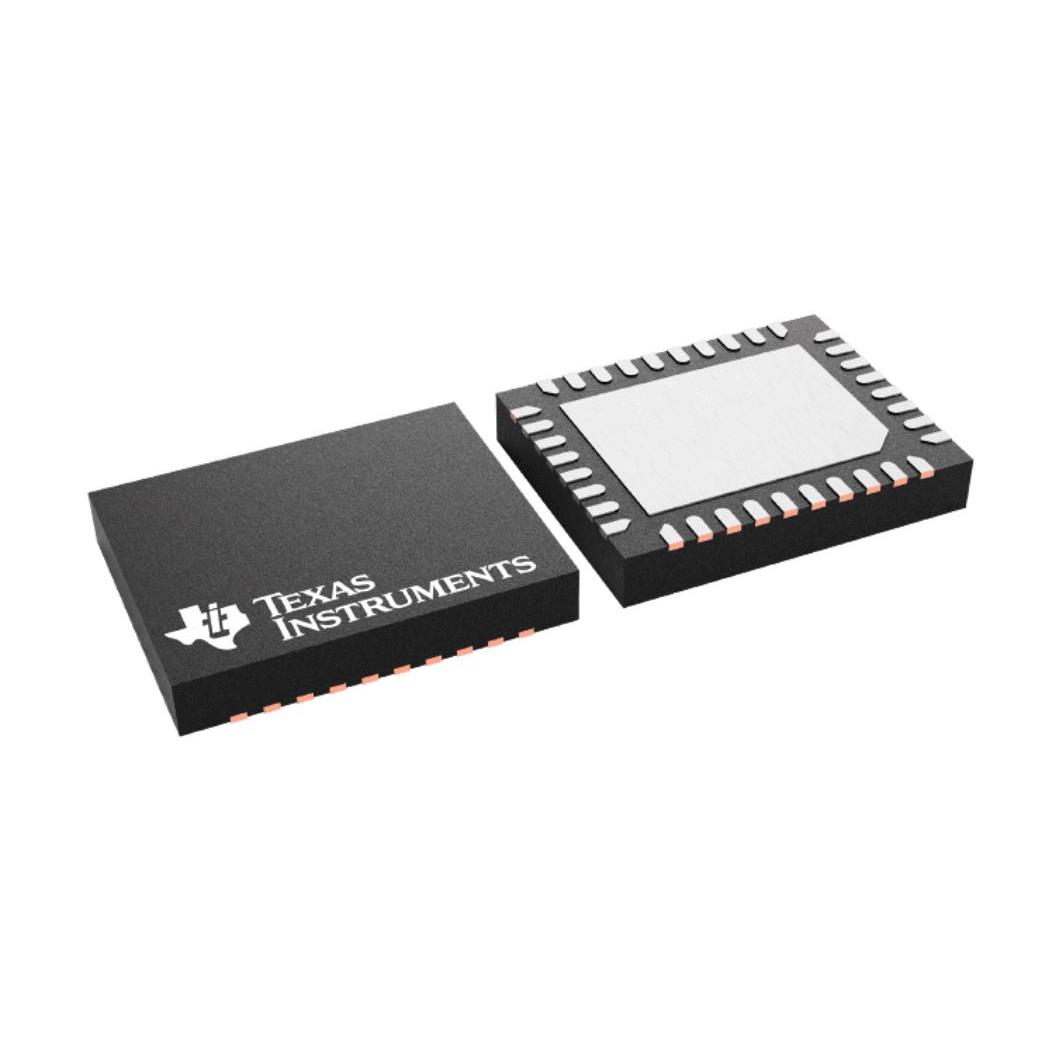
The DRV8317HREER is a three-phase PWM motor driver from Texas Instruments designed for brushless DC (BLDC) motors. It integrates three half-bridge circuits with N-channel power MOSFETs, supporting supply voltages from 4.5 V to 20 V. The device features integrated three-phase current sensing without external resistors and includes a built-in 3.3 V LDO regulator providing up to 80 mA. It supports configurable 6x or 3x PWM control schemes for sensorless or sensored field-oriented control (FOC), sinusoidal, or trapezoidal control. The H-revision utilizes pin-based configuration for simplified implementation.
Verify the specific suffix 'HREER' corresponds to the pin-configurable variant rather than the SPI-configurable 'S' version. Confirm the package type matches the required PCB footprint. Ensure the operating voltage range aligns with the system's 2S to 4S battery or fixed rail requirements. Check for automotive qualification if the application requires AEC-Q100 standards, as standard versions may differ.
Select this component when a simplified hardware configuration is preferred over SPI programming. The H-revision allows setting PWM mode, slew rate, and gain via physical pins, reducing microcontroller GPIO usage. Choose this part for applications requiring integrated current sensing to reduce bill-of-materials complexity. Consider the 5 A peak current capability and 130 mΩ typical RDS(ON) for thermal management in compact designs.
The DRV8317 series represents Texas Instruments' solution for compact, high-performance three-phase motor drives. The H-revision specifically targets cost-sensitive and space-constrained applications by removing the SPI interface requirement. It complements other TI motor drivers by offering integrated protection features such as UVLO, OVP, OCP, and thermal shutdown within a small surface-mount package.
The H-revision is configured using external hardware pins to set PWM mode, slew rate, and current detection gain, unlike the S-revision which uses an SPI interface.
No, the device integrates three-phase current detection internally, eliminating the need for external shunt resistors.
 DRV8317HREER
The activity of extra discounts on wholesale prices is in full swing…
Please fill in your contact information and we will send you the latest wholesale price list.