 ChipApex | Global Electronic Components Supplier
SEARCH
Search Product
Search Post
— IC芯片 | 连接器 | 传感器 | 被动器件 —
Search productSearch post
— IC芯片 | 连接器 | 传感器 | 被动器件 —
Consult the customer manager about the wholesale price.
consultation hotline:86-132-6715-2157
email:[email protected]
Contact the product manager for consultation. One-stop consultation is available.
Do you want a lower wholesale price? Please send us your inquiry and we will reply immediately.
The DRV8323HRTAR is a three-phase smart gate driver manufactured by Texas Instruments, designed for brushless DC motor applications. It integrates six high-side and low-side half-bridge drivers within a WQFN-40 package. The device supports a supply voltage range of 6 V to 60 V and delivers a peak output current of 1 A. Key integrated features include current sense amplifiers, hardware management interfaces, and SPI/I2C communication capabilities. It operates reliably across a temperature range of -40°C to +125°C.
Verify the specific suffix 'HRTAR' corresponds to the WQFN-40 package and reel/cut-tape availability from authorized distributors. Confirm RoHS compliance status and moisture sensitivity level requirements for your assembly process. Ensure the ordering part number matches the exact pinout and thermal pad configuration specified in the official datasheet to avoid compatibility issues with existing PCB layouts.
Select this component when a single-chip solution for three-phase BLDC motors is required, combining gate driving and current sensing. It is suitable for designs needing adjustable current sense amplifier gains to optimize signal-to-noise ratio without external op-amps. Consider the WQFN-40 package size constraints and thermal dissipation requirements relative to the 1 A peak drive current capability and operating temperature range.
This part belongs to the DRV8323 series of three-phase smart gate drivers. It is distinct from the DRV8323R variant, which includes an integrated buck step-down converter. The DRV8323HRTAR focuses on providing high-performance gate driving and current sensing functionality without onboard power conversion, making it appropriate for systems where external power regulation is already present or preferred.
The DRV8323RHRGZR serves as a functional alternative within the same family but includes an integrated buck converter and uses a VQFN-48 package. Direct substitution requires verifying package footprint compatibility and ensuring the absence of the buck converter does not impact system power architecture.
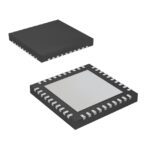 DRV8323HRTAR
The activity of extra discounts on wholesale prices is in full swing…
Please fill in your contact information and we will send you the latest wholesale price list.





