 ChipApex | Global Electronic Components Supplier
SEARCH
Search Product
Search Post
— IC芯片 | 连接器 | 传感器 | 被动器件 —
Search productSearch post
— IC芯片 | 连接器 | 传感器 | 被动器件 —
Consult the customer manager about the wholesale price.
consultation hotline:86-132-6715-2157
email:[email protected]
Contact the product manager for consultation. One-stop consultation is available.
Do you want a lower wholesale price? Please send us your inquiry and we will reply immediately.
The DRV8350RSRGZR is a three-phase smart gate driver manufactured by Texas Instruments, designed for brushless DC motor applications. It operates within a supply voltage range of 6 V to 95 V and supports load voltages from 9 V to 75 V. The device features an integrated buck regulator capable of delivering up to 2 A to power external components. It includes three high-side and three low-side gate drivers with peak output currents of 25 mA. Communication is handled via an SPI interface, allowing for configuration and monitoring. The unit is housed in a 48-VQFN package and functions reliably across an operating temperature range of -40°C to +125°C.
Verify the specific suffix RSRGZR to confirm the reel packaging format and pinout compatibility. Ensure the design accounts for the moisture sensitivity level indicated in the datasheet. Confirm that the host microcontroller supports the required SPI communication protocol. Check for any regional compliance requirements such as RoHS status before finalizing procurement.
Select this component when a compact solution for three-phase BLDC motors is required. It is suitable for designs needing integrated gate driving and current sensing capabilities without external discrete drivers. Consider the 48-VQFN package size constraints and thermal dissipation requirements. Verify that the input voltage range matches the system power supply specifications.
This part belongs to the DRV8350R series of smart gate drivers from Texas Instruments. It is engineered to simplify the design of three-phase motor control systems by integrating essential drive and protection functions. The series is commonly used in applications requiring reliable motor operation with minimal external component count.
The DRV8350RSRGZT is a tape-and-reel alternative within the same family. The DRV8353RSRGZR offers similar functionality but may include additional features such as integrated current shunt amplifiers. Verify pin-to-pin compatibility and electrical parameter alignment before substitution.
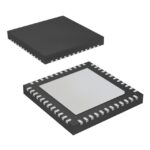 DRV8350RSRGZR
The activity of extra discounts on wholesale prices is in full swing…
Please fill in your contact information and we will send you the latest wholesale price list.





