 ChipApex | Global Electronic Components Supplier
SEARCH
Search Product
Search Post
— IC芯片 | 连接器 | 传感器 | 被动器件 —
Search productSearch post
— IC芯片 | 连接器 | 传感器 | 被动器件 —
Consult the customer manager about the wholesale price.
consultation hotline:86-132-6715-2157
email:[email protected]
Contact the product manager for consultation. One-stop consultation is available.
Do you want a lower wholesale price? Please send us your inquiry and we will reply immediately.
The DRV8434APWPR is a bipolar stepper motor driver from Texas Instruments, designed for applications requiring precise motion control. It features an integrated half-bridge architecture with two N-channel power MOSFETs, supporting a supply voltage range of 4.5 V to 48 V and delivering up to 2.5 A full-scale output current. The device incorporates a microstepping divider capable of 1/256 resolution and utilizes an internal current detection system that eliminates the need for external sense resistors. Communication is managed via a four-wire synchronous SPI interface or STEP/DIR pins, allowing for configurable PWM chopping times and smart tuning options.
Verify the specific suffix 'PWPR' corresponds to the HTSSOP-28 package and tape-and-reel shipping configuration when sourcing. Confirm that the 'A' grade designation meets your required operating temperature specifications. Ensure compatibility with your system's logic voltage levels, as the device supports 1.8 V, 3.3 V, and 5.0 V inputs. Cross-reference the datasheet revision to confirm pinout consistency with existing designs.
Select this component when high-resolution positioning is required without external sensing components. The internal current detection simplifies thermal management and PCB layout compared to traditional resistor-based drivers. Consider the HTSSOP-28 package for applications needing robust surface-mount assembly. Evaluate the SPI interface benefits if complex configuration or daisy-chaining multiple drivers is necessary for the system architecture.
This part belongs to the DRV8434E series of stepper motor controllers. It shares core functional blocks with other variants in the family but differs in packaging and commercial grade specifications. The series is characterized by its integrated power stage and advanced microstepping capabilities, targeting compact industrial and consumer motion control solutions.
Direct substitutes within the same package include other DRV8434 variants with different suffixes indicating package type or grade. Verify electrical equivalence regarding current ratings and voltage limits before substitution. Check for any differences in thermal performance or pin assignment if moving between different package styles within the product line.
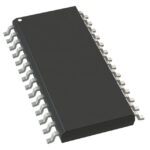 DRV8434APWPR
The activity of extra discounts on wholesale prices is in full swing…
Please fill in your contact information and we will send you the latest wholesale price list.





