 ChipApex | Global Electronic Components Supplier
SEARCH
Search Product
Search Post
— IC芯片 | 连接器 | 传感器 | 被动器件 —
Search productSearch post
— IC芯片 | 连接器 | 传感器 | 被动器件 —
Consult the customer manager about the wholesale price.
consultation hotline:86-132-6715-2157
email:[email protected]
Contact the product manager for consultation. One-stop consultation is available.
Do you want a lower wholesale price? Please send us your inquiry and we will reply immediately.
The DRV8436ERGER is a half-bridge stepper motor driver manufactured by Texas Instruments, designed for bipolar stepper or dual brushed DC motors. It operates within a supply voltage range of 4.5 V to 48 V and delivers an output current of 1.5 A. The device features a maximum operating frequency of 400 kHz and a quiescent supply current of 5 mA. It supports a load voltage rating of 24 V and includes two outputs. The component functions reliably across a temperature range of -40°C to +125°C. It utilizes a surface-mount VQFN-24 package with dimensions of 4x4 mm.
Verify the specific suffix 'ERGER' against the official Texas Instruments datasheet to confirm the exact packaging configuration and RoHS compliance status. Ensure that the ordering quantity aligns with the manufacturer's standard reel size requirements. Cross-reference the Mouser part number 595-DRV8436ERGER for accurate distributor identification. Confirm lead times directly with authorized suppliers as production cycles may vary based on current inventory levels.
Select this component when a 1.5 A output current is sufficient for the target motor application. The 48 V maximum supply voltage makes it suitable for low-to-medium voltage systems. Consider the VQFN-24 package for space-constrained designs requiring surface mount technology. Evaluate the 400 kHz switching frequency against noise and efficiency requirements. Compare against higher current variants like the DRV8434 if increased torque is needed.
This part belongs to the DRV8436E series from Texas Instruments, categorized under Motor / Motion / Ignition Controllers & Drivers. It is classified as a Half Bridge type within the PMIC - Power Management ICs subcategory. The series is designed for integrated motor control solutions, offering a compact alternative to discrete driver implementations.
The DRV8436PRGER is identified as a parameter-equivalent substitute in public distributor records. Verify compatibility regarding package variations and specific electrical tolerances before substitution.
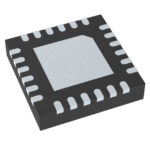 DRV8436ERGER
The activity of extra discounts on wholesale prices is in full swing…
Please fill in your contact information and we will send you the latest wholesale price list.





