 ChipApex | Global Electronic Components Supplier
SEARCH
Search Product
Search Post
— IC芯片 | 连接器 | 传感器 | 被动器件 —
Search productSearch post
— IC芯片 | 连接器 | 传感器 | 被动器件 —
Consult the customer manager about the wholesale price.
consultation hotline:86-132-6715-2157
email:[email protected]
Contact the product manager for consultation. One-stop consultation is available.
Do you want a lower wholesale price? Please send us your inquiry and we will reply immediately.
The DRV8817DAP is a dual H-bridge motor driver integrated circuit designed for low-voltage applications. It supports bipolar stepper motors and two DC motors with independent PWM control. The device features an integrated charge pump to drive high-side N-channel MOSFETs, enabling efficient operation at supply voltages up to 30 V. It includes built-in current regulation with selectable decay modes (slow, mixed, fast) and provides comprehensive protection mechanisms such as over-current protection, thermal shutdown, and under-voltage lockout.
Verify the exact suffix 'DAP' corresponds to the specific package type and tape-and-reel quantity required for your assembly line. Confirm that the operating voltage range and current ratings align with your system's power supply capabilities. Ensure proper thermal management solutions are implemented given the power dissipation characteristics of the DAP package. Cross-reference the datasheet revision date to ensure compatibility with your design specifications.
Choose this component when a compact solution for driving two DC motors or one bipolar stepper motor is needed within a 30V limit. It is suitable for designs requiring integrated current sensing and protection without external discrete components. Consider the DAP package size constraints and thermal requirements during PCB layout. Evaluate if the fixed frequency current regulation meets your noise sensitivity requirements compared to variable frequency alternatives.
The DRV8817 belongs to Texas Instruments' family of motor drivers focused on low-voltage, low-cost applications. It complements higher-power drivers like the DRV8825 by offering a smaller footprint and lower current capacity. This series is commonly used in consumer electronics where space and cost efficiency are critical. The DAP package variant offers a thermally enhanced solution for moderate power densities.
Direct replacements may include other TI dual H-bridge drivers such as the DRV8834 or DRV8838, depending on voltage and current requirements. Verify pin-to-pin compatibility and electrical specifications before substitution. Alternative manufacturers may offer similar functionality but require careful evaluation of interface signals and protection features.
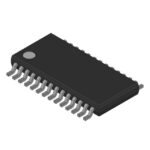 DRV8817DAP
The activity of extra discounts on wholesale prices is in full swing…
Please fill in your contact information and we will send you the latest wholesale price list.





