 ChipApex | Global Electronic Components Supplier
SEARCH
Search Product
Search Post
— IC芯片 | 连接器 | 传感器 | 被动器件 —
Search productSearch post
— IC芯片 | 连接器 | 传感器 | 被动器件 —
Consult the customer manager about the wholesale price.
consultation hotline:86-132-6715-2157
email:[email protected]
Contact the product manager for consultation. One-stop consultation is available.
Do you want a lower wholesale price? Please send us your inquiry and we will reply immediately.
The DRV8833PWP is a dual H-bridge motor driver manufactured by Texas Instruments, designed for low-voltage applications. It operates within a supply voltage range of 2.7 V to 10.8 V and supports peak output currents up to 2 A per bridge. The device integrates current regulation and features a PWM control interface. It is housed in a 16-pin HTSSOP package with an exposed PowerPad for thermal management. The component functions effectively as a driver for one or two DC motors or a single bipolar stepper motor.
Verify the specific suffix against the manufacturer's latest datasheet to confirm pinout compatibility and electrical ratings. Ensure the ordering part number matches the required package variant and temperature grade. Cross-reference the component marking with official silkscreen documentation to prevent counterfeit substitution. Confirm RoHS compliance status if environmental regulations apply to the final assembly.
Select this component when designing systems requiring dual independent motor channels within a compact footprint. It is suitable for applications powered by single-cell lithium-ion batteries or multiple AA/AAA cells. Consider the thermal performance of the HTSSOP package relative to the expected continuous current load. Evaluate the need for integrated current limiting versus external protection schemes based on system safety requirements.
This device belongs to the DRV8833 family of low-voltage motor drivers from Texas Instruments. The family includes variants with different current capabilities and packaging options, such as the DRV8833C for lower current applications. The PWP suffix specifically denotes the HTSSOP-16 package configuration. This series is engineered for cost-sensitive consumer electronics and industrial automation tasks.
Direct substitutes include other DRV8833 variants like DRV8833PWPR or DRV8833CPWPR, provided the current rating meets the application needs. Verify that alternative packages maintain compatible pin assignments and thermal dissipation characteristics. Check for any differences in operating temperature ranges or control logic levels before implementation.
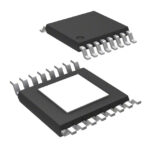 DRV8833PWP
The activity of extra discounts on wholesale prices is in full swing…
Please fill in your contact information and we will send you the latest wholesale price list.





