 ChipApex | Global Electronic Components Supplier
SEARCH
Search Product
Search Post
— IC芯片 | 连接器 | 传感器 | 被动器件 —
Search productSearch post
— IC芯片 | 连接器 | 传感器 | 被动器件 —
Consult the customer manager about the wholesale price.
consultation hotline:86-132-6715-2157
email:[email protected]
Contact the product manager for consultation. One-stop consultation is available.
Do you want a lower wholesale price? Please send us your inquiry and we will reply immediately.
The DRV8870DDA is a single H-bridge motor driver manufactured by Texas Instruments, designed for brushed DC and unipolar stepper motor applications. It operates within a supply voltage range of 6.5 V to 45 V and delivers a peak output current of 3.6 A. The device utilizes an NMOS technology with a typical RDS(on) of 565 mΩ (HS+LS). It features integrated current regulation via analog inputs, PWM control interface, and comprehensive protection mechanisms including under-voltage lockout, over-current protection, and thermal shutdown. The component is housed in an 8-pin SO-PowerPad package suitable for surface mount installation.
Verify the specific ordering suffix carefully, as the DRV8870 family includes variants with different packaging or electrical characteristics. Confirm that the DDA suffix corresponds to the tube packaging format required for your assembly process. Cross-reference the manufacturer's latest product change notifications to ensure compliance with current specifications and availability status before finalizing procurement plans.
Select this component when a single H-bridge topology with integrated current limiting is required for motors operating between 6.5 V and 45 V. Ensure the PCB design accommodates the thermal requirements of the PowerPAD package for sustained operation. Verify that the application logic can support the PWM input interface and that external components for current sensing are compatible with the analog regulation pins.
The DRV8870DDA belongs to the DRV8870 series of motor drivers from Texas Instruments. This series is engineered for cost-effective and compact motor control solutions. The DDA variant specifically denotes the tube packaging option within the SO-PowerPad-8 form factor. It shares core functional architecture with other suffixes like DDAR but differs in shipping and handling configurations.
The DRV8870DDAR is a pin-compatible alternative within the same family, offering identical electrical performance but in tape-and-reel packaging. Evaluate based on manufacturing line compatibility and inventory management needs rather than functional differences.
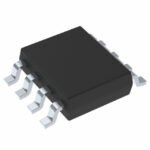 DRV8870DDA
The activity of extra discounts on wholesale prices is in full swing…
Please fill in your contact information and we will send you the latest wholesale price list.





