 ChipApex | Global Electronic Components Supplier
SEARCH
Search Product
Search Post
— IC芯片 | 连接器 | 传感器 | 被动器件 —
Search productSearch post
— IC芯片 | 连接器 | 传感器 | 被动器件 —
Consult the customer manager about the wholesale price.
consultation hotline:86-132-6715-2157
email:[email protected]
Contact the product manager for consultation. One-stop consultation is available.
Do you want a lower wholesale price? Please send us your inquiry and we will reply immediately.
The DRV8870LDDAR is a single H-bridge motor driver manufactured by Texas Instruments, designed for brushed DC and stepper motor applications. It operates within a supply voltage range of 6.5V to 45V and delivers a continuous output current of 3.6A with peak capabilities up to 5.2A. The device utilizes an NMOS technology architecture housed in an 8-pin SO PowerPAD (HSOP-8) surface-mount package. It features integrated current regulation via external sensing resistors, PWM control interfaces, and comprehensive protection mechanisms including overcurrent, overtemperature, and undervoltage lockout.
Verify the specific suffix 'LDDAR' against the official Texas Instruments datasheet to confirm pinout compatibility and electrical specifications. Ensure that the selected variant matches the required thermal performance and packaging standards for the target application environment. Cross-reference ordering information with authorized distributors to avoid counterfeit components.
Select this component when a single H-bridge topology is sufficient for driving brushed DC or unipolar stepper motors. Consider the 45V maximum supply limit and 3.6A continuous current rating for load matching. Evaluate PCB thermal design requirements due to the exposed power pad, ensuring adequate copper area for heat dissipation under high-current operating conditions.
The DRV8870 series represents a family of highly integrated motor drivers from Texas Instruments, combining logic control and power stages in a compact footprint. The DRV8870LDDAR specifically denotes a version within this lineup optimized for cost-effective solutions in mass-produced electronic devices. It shares architectural similarities with other members like the DRV8871 but differs in bridge configuration and feature sets.
Current regulation is achieved by connecting an external sense resistor between the motor output and ground. The resulting voltage drop is monitored by the internal circuitry to limit peak current and protect against stall conditions.
The device supports Pulse Width Modulation (PWM) input on its logic pins to regulate motor speed. The duty cycle of the PWM signal determines the average voltage applied to the motor load.
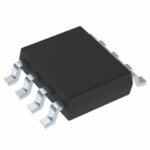 DRV8870LDDAR
The activity of extra discounts on wholesale prices is in full swing…
Please fill in your contact information and we will send you the latest wholesale price list.





