 ChipApex | Global Electronic Components Supplier
SEARCH
Search Product
Search Post
— IC芯片 | 连接器 | 传感器 | 被动器件 —
Search productSearch post
— IC芯片 | 连接器 | 传感器 | 被动器件 —
Consult the customer manager about the wholesale price.
consultation hotline:86-132-6715-2157
email:[email protected]
Contact the product manager for consultation. One-stop consultation is available.
Do you want a lower wholesale price? Please send us your inquiry and we will reply immediately.
The DRV8889QPWPRQ1 is an automotive-grade, fully integrated bipolar stepper motor driver from Texas Instruments. It supports a maximum supply voltage of 45 V and delivers up to 1.5 A full-scale output current per bridge. The device features an internal microstepping indexer capable of 1/256 microstep resolution for smooth motion control. Key technical specifications include a 4.5 V to 45 V operating voltage range, -40°C to +125°C junction temperature rating, and HTSSOP-24 package with exposed pad. It integrates current sensing, eliminating external resistors, and offers multiple protection mechanisms including overcurrent, overtemperature, and stall detection.
Verify the suffix PWPR indicates the HTSSOP-24 package with exposed thermal pad and reel packaging configuration. Confirm Q1 designation ensures compliance with AEC-Q100 automotive qualification standards. Check specific revision levels against the latest datasheet to ensure compatibility with required fault reporting and SPI command sets. Validate thermal management requirements for the target application environment.
Select this component when designing automotive bipolar stepper motor drives requiring high integration and precise microstepping. It is suitable for applications needing integrated current sensing to save board space and advanced diagnostics like stall detection. Choose this part over non-automotive variants if AEC-Q100 reliability is mandatory. Consider the HTSSOP-24 package constraints for thermal dissipation in high-current scenarios.
This device belongs to the DRV8889 family of automotive stepper motor drivers. It shares functional similarities with the DRV8889A-Q1 but may differ in specific electrical characteristics or package options. The Q1 suffix denotes automotive grade qualification. It is distinct from linear LED drivers like the LP8869 series or brushed DC drivers like the DRV8910 series within the same manufacturer portfolio.
The DRV8889A-QPRQ1 is a documented alternative within the same family offering similar functionality. Verify pinout compatibility and specific electrical parameter differences before substitution. Ensure the replacement part meets the same AEC-Q100 automotive qualification requirements.
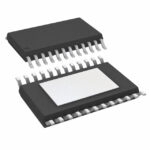 DRV8889QPWPRQ1
The activity of extra discounts on wholesale prices is in full swing…
Please fill in your contact information and we will send you the latest wholesale price list.





