 ChipApex | Global Electronic Components Supplier
SEARCH
Search Product
Search Post
— IC芯片 | 连接器 | 传感器 | 被动器件 —
Search productSearch post
— IC芯片 | 连接器 | 传感器 | 被动器件 —
Consult the customer manager about the wholesale price.
consultation hotline:86-132-6715-2157
email:[email protected]
Contact the product manager for consultation. One-stop consultation is available.
Do you want a lower wholesale price? Please send us your inquiry and we will reply immediately.
The DRV8889QWRGERQ1 is an automotive-grade bipolar stepper motor driver from Texas Instruments, designed for high-reliability applications. It features a wide supply voltage range of 4.5 V to 45 V and delivers up to 1.5 A full-scale output current with a 2.4 A peak capacity per bridge. The device supports microstepping resolutions from 1 to 1/256 step and integrates intelligent tuning decay technology. It utilizes a 24-pin VFQFN package (4x4 mm) and operates within a temperature range of -40°C to +125°C. Key interfaces include SPI and Step/Direction control.
Verify the specific suffix Q1 indicates AEC-Q100 automotive qualification status. Confirm the WRG package designation corresponds to the 24-VFQFN form factor. Ensure compatibility with system voltage requirements between 4.5 V and 45 V. Check thermal management needs given the 125°C operating limit. Validate that the NMOS technology aligns with load characteristics.
Select this component for applications requiring precise motion control in harsh automotive environments. The integrated current sensing reduces bill-of-materials complexity by removing external shunt resistors. Consider the low standby current of 2 μA for battery-sensitive systems. The programmable output slew rate helps minimize electromagnetic interference. Evaluate the need for SPI daisy-chain capabilities if multiple drivers are present.
This part belongs to the DRV8889 family of stepper drivers. It is specifically engineered for automotive use cases demanding high durability and precision. The device combines control logic with power stages in a compact surface-mount package. It addresses the need for smooth motor operation through advanced microstepping and decay control techniques suitable for modern vehicle electronics.
The DRV8889AQWRGERQ1 is documented as a parameter-equivalent substitute. Verify pinout and electrical specifications match before substitution. Ensure the alternative maintains the required automotive qualification level.
No, the device features integrated current sensing, which eliminates the need for external sense resistors.
The driver supports microstepping resolutions up to 1/256 step.
It employs advanced stall detection algorithms to identify when the motor stops and can trigger appropriate responses.
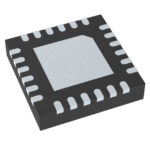 DRV8889QWRGERQ1
The activity of extra discounts on wholesale prices is in full swing…
Please fill in your contact information and we will send you the latest wholesale price list.





