 ChipApex | Global Electronic Components Supplier
SEARCH
Search Product
Search Post
— IC芯片 | 连接器 | 传感器 | 被动器件 —
Search productSearch post
— IC芯片 | 连接器 | 传感器 | 被动器件 —
Consult the customer manager about the wholesale price.
consultation hotline:86-132-6715-2157
email:[email protected]
Contact the product manager for consultation. One-stop consultation is available.
Do you want a lower wholesale price? Please send us your inquiry and we will reply immediately.
The DS1005M-250+ is a 5-tap all-silicon delay line housed in an 8-pin DIP package. It provides five equally spaced output taps with delays ranging from 50 ns to 250 ns, corresponding to the -250 suffix. The device operates on a single +5V supply and features TTL/CMOS compatible logic levels. Delay accuracy is specified at ±2 ns or ±3%, whichever is greater, across the commercial temperature range of 0°C to 70°C. Each tap can drive up to ten 74LS loads, ensuring robust signal integrity for digital timing applications.
Verify the specific ordering suffix matches the required package type, as the base model supports various configurations. Confirm that the ambient operating environment remains within the specified 0°C to 70°C range to maintain guaranteed delay accuracy. Ensure supply voltage stability within ±5% of 5.0V to prevent deviation from electrical specifications during operation.
Select this component when fixed, equally spaced delays are required without programmability. The 8-pin DIP variant offers space savings compared to the 14-pin version while maintaining pin compatibility. Consider the -250 suffix specifically for applications requiring a maximum total delay of 250 ns. Verify load requirements do not exceed the driving capability of ten 74LS equivalents per tap.
This device belongs to the DS1005 family of silicon delay lines, which replaces older hybrid technologies with superior reliability. The family includes variants with different total delay times, such as -60, -100, and -200, allowing designers to choose the appropriate timing resolution. The M suffix denotes the compact 8-pin DIP package, distinct from the standard 14-pin DIP or surface-mount SOIC options available in the same series.
Direct pin-compatible replacements include other DS1005 variants with different delay values, provided the timing requirements align. Cross-reference with legacy hybrid delay lines if system board constraints require identical footprint retention. Verify that substitute components meet the same TTL/CMOS compatibility and drive current specifications to ensure functional equivalence.
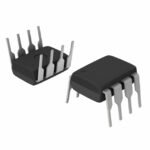 DS1005M-250+
The activity of extra discounts on wholesale prices is in full swing…
Please fill in your contact information and we will send you the latest wholesale price list.






