 ChipApex | Global Electronic Components Supplier
SEARCH
Search Product
Search Post
— IC芯片 | 连接器 | 传感器 | 被动器件 —
Search productSearch post
— IC芯片 | 连接器 | 传感器 | 被动器件 —
Consult the customer manager about the wholesale price.
consultation hotline:86-132-6715-2157
email:[email protected]
Contact the product manager for consultation. One-stop consultation is available.
Do you want a lower wholesale price? Please send us your inquiry and we will reply immediately.
The DS100BR410SQE/NOPB is a quad-channel linear redriver manufactured by Texas Instruments, designed for high-speed serial data transmission up to 10.3 Gbps. It operates on a single 2.5 V power supply with a typical operating current of 104 mA per channel. The device features input equalization and output de-emphasis to compensate for signal loss in printed circuit board traces. It utilizes CML inputs and outputs and includes an I2C/SMBus interface for configuration. Packaged in a 48-WQFN (7x7 mm) housing, it supports front port and backplane applications within an operating temperature range of -40°C to +85°C.
Verify the specific suffix 'SQE' against the manufacturer's official datasheet to confirm pinout compatibility and electrical specifications. Ensure the component meets RoHS directives and humidity sensitivity level requirements for your assembly process. Confirm that the 48-WQFN package dimensions align with your PCB footprint design rules before finalizing procurement orders.
Select this component when designing systems requiring low-power signal integrity restoration for 10G Ethernet or SATA links. Compare its 104 mA current consumption against other redrivers if power efficiency is critical. Ensure the I2C address configuration options meet your system's bus addressing constraints. Verify that the CML voltage levels are compatible with the source and destination devices in your link budget.
This part belongs to the DS100BR410 series of low-power quad-channel redrivers from Texas Instruments. It serves as a signal conditioning solution for high-speed serial interfaces where trace losses degrade signal quality. The device complements retimers like the DS100RT410 by offering a simpler, lower-power alternative for moderate reach applications without full clock recovery capabilities.
Direct substitutes include the DS100BR410SQ/NOPB, which shares identical functionality and packaging. Evaluate the DS100BR111ASQ/NOPB for dual-channel applications requiring similar performance characteristics. Always verify pin-to-pin compatibility and electrical parameters with the manufacturer before swapping components in existing designs.
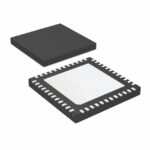 DS100BR410SQE/NOPB
The activity of extra discounts on wholesale prices is in full swing…
Please fill in your contact information and we will send you the latest wholesale price list.





