 ChipApex | Global Electronic Components Supplier
SEARCH
Search Product
Search Post
— IC芯片 | 连接器 | 传感器 | 被动器件 —
Search productSearch post
— IC芯片 | 连接器 | 传感器 | 被动器件 —
Consult the customer manager about the wholesale price.
consultation hotline:86-132-6715-2157
email:[email protected]
Contact the product manager for consultation. One-stop consultation is available.
Do you want a lower wholesale price? Please send us your inquiry and we will reply immediately.
The DS1010-100 is a 10-tap silicon delay line manufactured by Analog Devices Inc./Maxim Integrated. It provides a total fixed delay of 100 ns with individual tap increments of 10 ns. The device operates on a single 5V supply (4.75V to 5.25V) and features low-power CMOS technology compatible with TTL/CMOS logic levels. It offers high precision with leading and trailing edge accuracy within ±5% or ±2 ns, whichever is greater. Available in standard 14-pin DIP and 16-pin SOIC packages, it supports vapor phase, IR, and wave soldering methods.
Verify component authenticity through authorized distributors or direct manufacturer channels. Confirm package type availability as the DS1010 series includes both DIP and SOIC variants. Check current lifecycle status since older Maxim Integrated products may be discontinued or subject to long-lead times. Ensure voltage and temperature specifications match the target application environment before procurement.
Select the DS1010-100 when a fixed 100 ns total delay is required across ten taps. Consider the 16-pin SOIC version for reduced PCB area requirements compared to the 14-pin DIP. Verify that the load capacitance does not exceed the driving capability of up to ten 74LS loads per tap. Ensure the operating temperature range aligns with the commercial grade specification of 0°C to 70°C.
The DS1010 series represents an all-silicon alternative to traditional hybrid delay lines, offering improved economy and reliability. Manufactured originally by Dallas Semiconductor and later Maxim Integrated, this family provides fixed delay solutions without programmability. The -100 suffix specifically denotes the 100 ns total delay variant within the broader DS1010 catalog.
Direct pin-compatible replacements are limited due to the proprietary nature of the delay values. Evaluate other 10-tap silicon delay lines from manufacturers like Data Delay Devices if exact timing parameters can be adjusted. Verify that substitute components maintain similar propagation delay tolerances and drive capabilities.


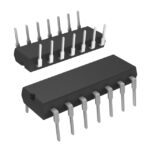 DS1010-100
The activity of extra discounts on wholesale prices is in full swing…
Please fill in your contact information and we will send you the latest wholesale price list.




