 ChipApex | Global Electronic Components Supplier
SEARCH
Search Product
Search Post
— IC芯片 | 连接器 | 传感器 | 被动器件 —
Search productSearch post
— IC芯片 | 连接器 | 传感器 | 被动器件 —
Consult the customer manager about the wholesale price.
consultation hotline:86-132-6715-2157
email:[email protected]
Contact the product manager for consultation. One-stop consultation is available.
Do you want a lower wholesale price? Please send us your inquiry and we will reply immediately.
The DS1013-20 is a silicon delay line integrated circuit manufactured by Analog Devices Inc./Maxim Integrated. It features three independent, monolithic, logic-buffered delay lines housed in a 14-DIP package with a 0.300-inch (7.62mm) width. The device operates on a single 5V supply, ranging from 4.75V to 5.25V, and supports through-hole mounting. It provides a fixed total delay of 20ns per channel with a single tap configuration. The component functions as multiple, non-programmable delay elements suitable for timing applications within an operating temperature range of 0°C to 70°C.
Verify the specific suffix designation when sourcing replacements, as the base DS1013 series includes variants with different delay times such as the DS1013-50+. Confirm that the required 20ns delay matches the application requirements before procurement. Check for RoHS compliance status if environmental regulations apply to the manufacturing process. Ensure the 14-pin DIP package fits the target PCB footprint.
Select this component when a precise 20ns delay is required for each of three independent channels. Compare against other DS1013 variants like the -50+ or -100 models if longer delays are needed. Consider the 14-DIP package constraints and verify that the 0°C to 70°C commercial temperature range meets the operational environment. Ensure the 5V supply voltage aligns with the system power architecture.
The DS1013-20 belongs to the DS1013 family of silicon delay lines produced by Maxim Integrated, now part of Analog Devices. This series offers a cost-effective alternative to hybrid delay line solutions. The family includes various delay options, with the -20 variant specifically providing 20ns of delay. These devices are designed for reliability and performance in timing-critical applications.
Direct substitutes include other DS1013 variants with different delay values, such as the DS1013-50+ or DS1013-100+, provided the delay specification can be adjusted. Verify pin compatibility and package dimensions before substitution.


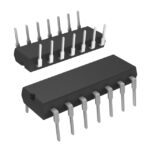 DS1013-20
The activity of extra discounts on wholesale prices is in full swing…
Please fill in your contact information and we will send you the latest wholesale price list.




