 ChipApex | Global Electronic Components Supplier
SEARCH
Search Product
Search Post
— IC芯片 | 连接器 | 传感器 | 被动器件 —
Search productSearch post
— IC芯片 | 连接器 | 传感器 | 被动器件 —
Consult the customer manager about the wholesale price.
consultation hotline:86-132-6715-2157
email:[email protected]
Contact the product manager for consultation. One-stop consultation is available.
Do you want a lower wholesale price? Please send us your inquiry and we will reply immediately.
The DS1073Z-60 is a fixed-frequency oscillator manufactured by Analog Devices Inc./Maxim Integrated, housed in an 8-pin SOIC package. It generates a precise 60.000 MHz output signal with no external components required for basic operation. The device operates on a 2.7V to 3.6V supply and features user-programmable internal dividers (1 to 513) and prescalers (1, 2, or 4). Key electrical specifications include a typical active supply current of 50 mA at industrial temperatures (-40°C to +85°C), a standby current of 0.8 µA in power-down mode, and a frequency accuracy of ±0.5% at 25°C.
Verify the specific suffix 'Z' indicates the commercial temperature range (0°C to +70°C) as per the datasheet table. Confirm that the device requires external programming hardware using the 1-Wire protocol before board production, as factory defaults may not match the target application frequency.
Select the DS1073Z-60 when a fixed 60 MHz clock is required without external crystals. Ensure the design accommodates the 50 mA active current draw. For applications requiring switching between internal and external references, configure the PDN/SELX pin accordingly during programming.
This component belongs to the DS1073 EconOscillator family, which includes variants for 100 MHz, 80 MHz, and 66.667 MHz. The 'Z' suffix denotes the SOIC package and commercial temperature rating, while 'M' denotes the DIP package. These devices replace discrete crystal and buffer combinations.
Direct functional substitutes within the same family include DS1073Z-100, DS1073Z-80, and DS1073Z-66, provided the frequency difference is acceptable. Cross-manufacturer replacements require verifying voltage compatibility and pinout alignment.
Programming mode is initiated by powering up the device with a pull-up resistor connected between the I/O pin and VCC. This pulls the I/O pin high during power-on reset.
OUT0 provides a buffered output of the master reference clock (internal or external). It is unaffected by the OE pin but is disabled during power-down if the EN0 bit is set to 0.
Yes, if the PDN bit is programmed to 0, the PDN/SELX pin acts as SELX, allowing glitch-free switching between the internal oscillator and an external reference based on the logic level applied.


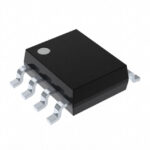 DS1073Z-60
The activity of extra discounts on wholesale prices is in full swing…
Please fill in your contact information and we will send you the latest wholesale price list.



