 ChipApex | Global Electronic Components Supplier
SEARCH
Search Product
Search Post
— IC芯片 | 连接器 | 传感器 | 被动器件 —
Search productSearch post
— IC芯片 | 连接器 | 传感器 | 被动器件 —
Consult the customer manager about the wholesale price.
consultation hotline:86-132-6715-2157
email:[email protected]
Contact the product manager for consultation. One-stop consultation is available.
Do you want a lower wholesale price? Please send us your inquiry and we will reply immediately.
The DS1085LZ-25+ is a dual-output frequency synthesizer from Analog Devices/Maxim Integrated, operating on a single 5V supply. It generates a main oscillator output (OUT1) ranging from 8.1kHz to 133MHz and a reference oscillator output (OUT0) from 8.2MHz to 133MHz. The device features a 2-wire serial interface for user-programmable frequency synthesis with three resolution options; the -25 suffix indicates a 25kHz step size. It includes nonvolatile EEPROM memory to store frequency settings, ensuring default values persist after power cycles. The internal master oscillator operates between 66MHz and 133MHz.
Verify the specific ordering suffix matches the required frequency step size, as the DS1085 family includes variants with 10kHz, 25kHz, and 50kHz resolutions. Confirm package type compatibility, as the standard variant uses a 150mil SOIC package. Ensure the application voltage aligns with the specified 5V supply requirement. Check for updated datasheets regarding electrical characteristics over temperature ranges.
Select the DS1085LZ-25+ when a 25kHz frequency resolution is required for the main oscillator output. Compare against DS1085Z-10 and DS1085Z-50 if different step sizes are needed. Consider the OFFSET register range capabilities when targeting frequencies near the 66MHz to 133MHz master oscillator boundaries. Verify that the 2-wire bus speed requirements (standard or fast mode) are supported by the host controller.
The DS1085 belongs to the EconOscillator family of frequency synthesizers. It replaces discrete crystal and oscillator circuits by integrating the master oscillator, prescalers, and dividers into a single IC. The device allows for thousands of user-specified frequencies through programmable registers, offering flexibility in system design without external timing components.
Direct replacements within the same family include DS1085Z-10 (10kHz step) and DS1085Z-50 (50kHz step). These share identical pinouts and functionality but differ in frequency resolution. Verify that the specific step size requirement of the application can be met by these alternatives.
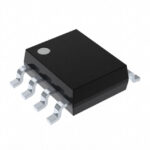 DS1085LZ-25+
The activity of extra discounts on wholesale prices is in full swing…
Please fill in your contact information and we will send you the latest wholesale price list.





