 ChipApex | Global Electronic Components Supplier
SEARCH
Search Product
Search Post
— IC芯片 | 连接器 | 传感器 | 被动器件 —
Search productSearch post
— IC芯片 | 连接器 | 传感器 | 被动器件 —
Consult the customer manager about the wholesale price.
consultation hotline:86-132-6715-2157
email:[email protected]
Contact the product manager for consultation. One-stop consultation is available.
Do you want a lower wholesale price? Please send us your inquiry and we will reply immediately.
The DS1087LU-21H+ is a factory-programmed 3.3V spread-spectrum clock generator producing square-wave outputs from 130kHz to 66.6MHz. It features an internal master oscillator with ±0.5% tolerance at +25°C and operates on a 2.7V to 3.6V supply. The device supports selectable 2% or 4% dithered output for EMI reduction, configurable via a 2-wire serial interface. Settings are stored in nonvolatile EEPROM, enabling standalone operation without external timing components.
Verify the 'L' suffix indicates the -40°C to +85°C temperature range and the '+T&R' designation confirms tape-and-reel packaging. Confirm the specific frequency code matches the required application, as the base model supports various standard frequencies. Check current availability status as distribution may be limited.
Select based on the required output frequency and dither percentage (2% or 4%). Ensure the 2.7V to 3.6V supply voltage aligns with system requirements. Consider the 8-pin µSOP package constraints and verify if the 2-wire serial interface is necessary for dynamic configuration or if stand-alone mode suffices.
This component belongs to the DS1087L EconOscillator family, designed as a drop-in replacement for traditional crystal oscillators. It eliminates the need for external resonators by integrating the oscillator circuitry directly onto the silicon die, simplifying PCB layout and reducing component count.
Direct replacements include other variants within the DS1087LU series with matching frequencies, such as DS1087LU-216 (16.6MHz) or DS1087LU-210 (10MHz). Verify pin compatibility and electrical specifications before substitution.
Dither is enabled via the SPRD pin and configured through the J0 bit in the PRESCALER register, allowing selection between 2% and 4% peak deviation.
The OE pin gates the output buffer, while the PDN pin disables the master oscillator entirely for power-sensitive applications, both featuring glitchless synchronous control.
Yes, in stand-alone mode, the device operates using factory-programmed settings stored in nonvolatile EEPROM, requiring only power and decoupling capacitors.
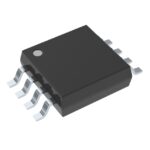 DS1087LU-21H+
The activity of extra discounts on wholesale prices is in full swing…
Please fill in your contact information and we will send you the latest wholesale price list.







