 ChipApex | Global Electronic Components Supplier
SEARCH
Search Product
Search Post
— IC芯片 | 连接器 | 传感器 | 被动器件 —
Search productSearch post
— IC芯片 | 连接器 | 传感器 | 被动器件 —
Consult the customer manager about the wholesale price.
consultation hotline:86-132-6715-2157
email:[email protected]
Contact the product manager for consultation. One-stop consultation is available.
Do you want a lower wholesale price? Please send us your inquiry and we will reply immediately.
The DS1135U-8/T&R is a high-speed, all-silicon delay line manufactured by Analog Devices Inc./Maxim Integrated. It integrates three independent buffered delays within a single package, designed for stable and precise timing over temperature and voltage variations. The device operates on a +5V supply (4.75V to 5.25V) and features leading and trailing edge precision that preserves input symmetry. Each output can drive up to 10 LS loads. The specific model provides an 8ns delay per output with an initial tolerance of ±1.0ns at nominal conditions (+25°C, VCC=+5.0V). It supports commercial and industrial temperature ranges (-40°C to +85°C) and is available in tape and reel packaging.
Verify the part number suffix against official documentation to confirm RoHS status and packaging type. Ensure the ordering code matches the required delay value and package style. Confirm availability through authorized distributors as lead times may vary. Check datasheet specifications for absolute maximum ratings to prevent damage during handling or operation.
Select this component when three independent delay channels are required in a compact form factor. Choose based on the specific nanosecond delay value needed from the standard options. Consider the 8-pin SOIC package constraints and surface mount installation requirements. Verify compatibility with existing system voltage levels and load driving capabilities.
The DS1135 series represents a low-power, high-speed evolution of the popular DS1013 and DS1035 delay lines. It serves as the fastest 3-in-1 silicon delay line solution in its class. The device is recommended as a direct replacement for older discrete or less integrated timing components in established designs.
DS1013
The typical output rise or fall time is 2.5 ns, with a maximum specified value of 2.0 ns under test conditions.
It utilizes precise leading and trailing edge accuracy to ensure that the timing characteristics of the input pulse are maintained at the outputs.
The power-up time is typically 100 ms, which is the duration from applying power until stable delays are produced at the outputs.


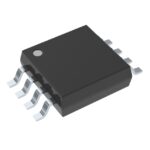 DS1135U-8/T&R
The activity of extra discounts on wholesale prices is in full swing…
Please fill in your contact information and we will send you the latest wholesale price list.




