 ChipApex | Global Electronic Components Supplier
SEARCH
Search Product
Search Post
— IC芯片 | 连接器 | 传感器 | 被动器件 —
Search productSearch post
— IC芯片 | 连接器 | 传感器 | 被动器件 —
Consult the customer manager about the wholesale price.
consultation hotline:86-132-6715-2157
email:[email protected]
Contact the product manager for consultation. One-stop consultation is available.
Do you want a lower wholesale price? Please send us your inquiry and we will reply immediately.
The DS1244WP-120+ is a 3.3V nonvolatile SRAM with an integrated phantom real-time clock, housed in a 34-pin PowerCap module package. It provides 32K x 8 bits of memory and tracks hundredths of seconds, minutes, hours, days, dates, months, and years. The device features automatic leap year compensation valid through 2100 and maintains data for over 10 years via an embedded lithium cell disconnected until first power application. Operating voltage ranges from 2.97V to 3.63V, with a maximum timekeeping current of 7mA at 3.3V. It supports parallel interface communication and operates within a commercial temperature range of 0°C to 70°C.
Verify the specific ordering suffix to confirm the temperature grade; the 'W' suffix indicates the commercial 0°C to +70°C range, while 'IND' denotes industrial -40°C to +85°C. Confirm that the separate DS9034PCX+ or DS9034I-PCX+ PowerCap containing the battery and crystal is ordered, as it is required for operation but shipped separately. Ensure the design accommodates the surface-mountable base and the keyed PowerCap module placement after reflow soldering.
Select this component when a combined NVSRAM and RTC solution is needed in a surface-mount form factor. The 3.3V supply requirement distinguishes it from the 5V DS1244Y variants. The PowerCap package allows the battery and crystal to be mounted after PCB assembly, protecting them from reflow heat. Verify that the host system can support the 64-bit pattern recognition sequence required to access the phantom clock registers.
This part belongs to the DS1244 family of 256Kb (32Kx8) NVSRAMs with phantom clocks. It is functionally similar to the DIP-packaged DS1244W-120+ but utilizes the PowerCap module format. It is pin-for-pin compatible with other PowerCap modules like the DS1248P and DS1251P, facilitating board-level upgrades or replacements where space constraints favor surface mount technology over through-hole DIP packages.
Public confirmed substitute part numbers include DS1244WP-120IND+ for industrial temperature range requirements.
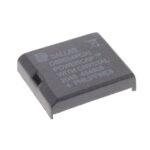 DS1244WP-120+
The activity of extra discounts on wholesale prices is in full swing…
Please fill in your contact information and we will send you the latest wholesale price list.





