 ChipApex | Global Electronic Components Supplier
SEARCH
Search Product
Search Post
— IC芯片 | 连接器 | 传感器 | 被动器件 —
Search productSearch post
— IC芯片 | 连接器 | 传感器 | 被动器件 —
Consult the customer manager about the wholesale price.
consultation hotline:86-132-6715-2157
email:[email protected]
Contact the product manager for consultation. One-stop consultation is available.
Do you want a lower wholesale price? Please send us your inquiry and we will reply immediately.
The DS1284QN+ is a Real-Time Clock (RTC) integrated circuit manufactured by Analog Devices Inc./Maxim Integrated. It provides clock and calendar functionality with a parallel interface in a 28-PLCC package. The device supports date formats of YY-MM-DD-dd and time formats of HH:MM:SS:hh in both 12-hour and 24-hour modes. It operates on a main supply voltage of 4.5V to 5.5V, drawing a maximum current of 7mA at 5V during timekeeping. A backup battery input accepts 2.4V to 3.5V to maintain data retention. The unit includes 50 bytes of static RAM and functions within an industrial temperature range of -40°C to +85°C.
Verify the specific ordering suffix and manufacturer lot codes against official Analog Devices documentation before procurement. Confirm that the 28-PLCC package dimensions match the target PCB footprint. Ensure compatibility with the system's parallel bus timing requirements and voltage levels. Check for end-of-life status or obsolescence notices from the manufacturer to assess long-term availability risks.
Select this component when a parallel interface is required for RTC functionality in space-constrained designs using PLCC packages. The 50-byte SRAM is suitable for moderate data storage needs. Verify that the operating temperature range of -40°C to +85°C meets the environmental conditions of the application. Ensure the system can provide the necessary 4.5V to 5.5V supply and a compatible 2.4V to 3.5V backup source.
The DS1284QN+ belongs to the DS1284 family of real-time clocks from Maxim Integrated, now part of Analog Devices. This series is designed for applications requiring reliable timekeeping with integrated memory. The 'QN+' suffix indicates the PLCC package variant with lead-free compliance. It serves as a standalone solution for adding calendar and clock functions to microprocessor-based systems without external components.
Consult official Analog Devices cross-reference guides for verified pin-compatible or functionally equivalent replacements. Verify that any substitute maintains the same parallel interface protocol and voltage specifications.
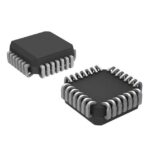 DS1284QN+
The activity of extra discounts on wholesale prices is in full swing…
Please fill in your contact information and we will send you the latest wholesale price list.





