 ChipApex | Global Electronic Components Supplier
SEARCH
Search Product
Search Post
— IC芯片 | 连接器 | 传感器 | 被动器件 —
Search productSearch post
— IC芯片 | 连接器 | 传感器 | 被动器件 —
Consult the customer manager about the wholesale price.
consultation hotline:86-132-6715-2157
email:[email protected]
Contact the product manager for consultation. One-stop consultation is available.
Do you want a lower wholesale price? Please send us your inquiry and we will reply immediately.
The DS1302ZN+ is a low-power real-time clock (RTC) and calendar integrated circuit manufactured by Analog Devices Inc./Maxim Integrated. It provides seconds, minutes, hours, date, month, day of the week, and year information with leap-year compensation valid up to the year 2100. The device features 31 bytes of battery-backed static RAM for general-purpose data storage. Communication is handled via a simple 3-wire serial interface compatible with most microcontrollers. It operates within a supply voltage range of 2V to 5.5V and supports an industrial temperature range of -40°C to +85°C.
Verify that the specific order suffix 'ZN+' corresponds to the industrial temperature grade (-40°C to +85°C) and the 8-SOIC (150 mils) package as defined in the manufacturer's ordering information. Confirm RoHS compliance status if required by local regulations. Ensure the supplier provides documentation matching the exact part number to avoid confusion with commercial grade or alternative package variants.
Select this component when a low-pin-count RTC with integrated non-volatile memory is required. The DS1302ZN+ is suitable for designs needing industrial temperature stability. Designers must account for the external 32.768kHz crystal requirement and ensure the microcontroller supports the specific 3-wire serial timing constraints. Verify that the system voltage remains within the 2.0V to 5.5V operational range for both primary and backup supplies.
The DS1302 series serves as a successor to earlier Dallas Semiconductor RTC models like the DS1202. The 'Z' suffix denotes the 8-pin SOIC (150 mils) surface-mount package, while 'N' indicates the industrial temperature rating. The '+' suffix signifies lead-free/RoHS-compliant manufacturing. This variant is distinct from the DIP package versions and the commercial temperature grade parts.
Direct pin-compatible replacements include other DS1302 variants such as DS1302SN+ (industrial, 208 mil SOIC) or DS1302ZN+T&R (tape and reel packaging). Note that interfaces differ significantly from I2C-based RTCs like the DS1307; software adaptation is required for cross-family substitution.
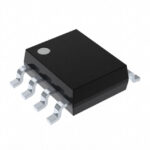 DS1302ZN+
The activity of extra discounts on wholesale prices is in full swing…
Please fill in your contact information and we will send you the latest wholesale price list.





