 ChipApex | Global Electronic Components Supplier
SEARCH
Search Product
Search Post
— IC芯片 | 连接器 | 传感器 | 被动器件 —
Search productSearch post
— IC芯片 | 连接器 | 传感器 | 被动器件 —
Consult the customer manager about the wholesale price.
consultation hotline:86-132-6715-2157
email:[email protected]
Contact the product manager for consultation. One-stop consultation is available.
Do you want a lower wholesale price? Please send us your inquiry and we will reply immediately.
The DS1321E+ is a CMOS flexible nonvolatile controller with an integrated lithium battery monitor, designed to convert standard CMOS SRAMs into nonvolatile memory. It operates within an industrial temperature range of -40°C to +85°C and supports supply voltages from 4.75V to 5.5V depending on the tolerance setting. The device manages up to four SRAM banks through three configurable modes, providing automatic power-fail detection, write protection, and seamless switching to battery backup. It features a low-leakage design that minimizes battery drain while ensuring data integrity during power interruptions.
Verify the specific package type required for your design, as the DS1321 family includes 16-pin PDIP, 16-pin SO, and 20-pin TSSOP options. Confirm that the manufacturing date code aligns with current RoHS compliance standards, indicated by the plus suffix. Ensure compatibility with your target operating temperature range before finalizing procurement orders.
Select the DS1321E+ variant specifically when a surface-mount 20-pin TSSOP package is necessary for the PCB layout. Consider the 5% or 10% power-fail detection tolerance settings based on the stability of the primary VCCI supply. Evaluate the maximum load current capabilities against the total SRAM consumption to ensure the device can sustain the backup mode without exceeding thermal limits.
This component belongs to the Maxim Integrated (now Analog Devices) DS1321 series of flexible nonvolatile controllers. It is part of a broader family that includes variants like the DS1321S+ and DS1321+, which differ primarily in their physical packaging configurations. The series addresses the common engineering challenge of maintaining data integrity in volatile memory systems during unexpected power loss events.
Direct pin-to-pin replacements are limited due to the specific configuration of the DS1321 family. Verify if other members of the DS1321 series, such as the DS1321S+ or DS1321+, meet the mechanical footprint requirements. Cross-referencing with newer NVSRAM solutions may be necessary if the legacy DS1321 is discontinued or unavailable.
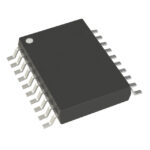 DS1321E+
The activity of extra discounts on wholesale prices is in full swing…
Please fill in your contact information and we will send you the latest wholesale price list.





