 ChipApex | Global Electronic Components Supplier
SEARCH
Search Product
Search Post
— IC芯片 | 连接器 | 传感器 | 被动器件 —
Search productSearch post
— IC芯片 | 连接器 | 传感器 | 被动器件 —
Consult the customer manager about the wholesale price.
consultation hotline:86-132-6715-2157
email:[email protected]
Contact the product manager for consultation. One-stop consultation is available.
Do you want a lower wholesale price? Please send us your inquiry and we will reply immediately.
The DS15MB200TSQX/NOPB is a low-voltage differential signaling (LVDS) interface integrated circuit manufactured by Texas Instruments. It functions as a dual 1.5-Gbps 2:1 or 1:2 LVDS multiplexer and buffer. The device supports input signal types including CML, LVDS, and LVPECL, while providing LVDS outputs. It operates within a supply voltage range of 3 V to 3.6 V, with a typical operating voltage of 3.3 V. The component features three drivers and three receivers, drawing approximately 275 mA of operating current. It is housed in a WQFN-48 package suitable for surface mount technology and maintains an operating temperature range from -40°C to +85°C.
Verify the specific suffix designation against official manufacturer documentation to confirm exact packaging and quality grade specifications. Ensure that the ordering information matches the required tape-and-reel configuration for automated assembly processes. Cross-reference the part number with the latest datasheet revision history to validate all electrical parameters and mechanical dimensions before finalizing procurement orders.
Select this component when designing circuits requiring dual-channel LVDS signal switching or buffering at speeds up to 1.5 Gbps. Consider the WQFN-48 package constraints regarding thermal dissipation and PCB layout space. Evaluate the input voltage compatibility with source devices supporting CML, LVDS, or LVPECL standards to ensure proper signal interfacing without additional level shifting components.
This device belongs to the DS15MB200 series of LVDS interface ICs designed for high-speed data communication. It serves as a critical interconnect solution for managing multiple data streams in compact form factors. The series is engineered to provide robust signal integrity and flexible routing capabilities for modern electronic systems requiring efficient data path management.
The SCAN15MB200TSQ/NOPB is a documented alternative within the same product family offering similar functional characteristics. Verify pinout compatibility and electrical parameter alignment before substituting. Consult official replacement guides to ensure performance equivalence in the target application environment.
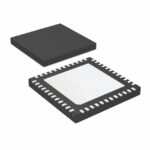 DS15MB200TSQX/NOPB
The activity of extra discounts on wholesale prices is in full swing…
Please fill in your contact information and we will send you the latest wholesale price list.





