 ChipApex | Global Electronic Components Supplier
SEARCH
Search Product
Search Post
— IC芯片 | 连接器 | 传感器 | 被动器件 —
Search productSearch post
— IC芯片 | 连接器 | 传感器 | 被动器件 —
Consult the customer manager about the wholesale price.
consultation hotline:86-132-6715-2157
email:[email protected]
Contact the product manager for consultation. One-stop consultation is available.
Do you want a lower wholesale price? Please send us your inquiry and we will reply immediately.
The DS2108S is a differential SCSI switchable terminator designed for High Voltage Differential (HVD) systems. It integrates eighteen 330-ohm and nine 150-ohm precise switched termination resistors into a monolithic IC housed in a 24-pin plastic SOIC package. The device operates with SCSI signal voltages ranging from -7 to +12 Volts and complies with SCSI, SCSI-2, and SCSI-3 standards as well as the EIA RS-485 standard. Termination power voltage ranges from 4.00V to 5.25V. In active mode, typical current consumption is 56 mA, reducing to 1 mA in power-down mode. Laser-trimmed resistors maintain ±5% tolerance over the full temperature range.
Verify component authenticity through authorized distributors or direct manufacturer channels due to discontinued status. Confirm RoHS compliance status as the product may not meet current environmental regulations. Validate pin configurations against specific board designs before integration. Check for available replacement components if long-term supply stability is required for production cycles.
Select this component for HVD SCSI applications requiring precise termination resistance values. Ensure the design accommodates the 24-pin SOIC footprint and thermal requirements. Verify that the control logic can manage the Power Down pin state effectively. Consider the specific voltage levels supported by the SCSI bus environment to ensure compatibility with the -7 to +12 Volt operating range.
The DS2108 series serves as a specialized interface solution for legacy SCSI infrastructure. Manufactured by Maxim Integrated, now part of Analog Devices Inc., it addresses the need for compact, surface-mount termination solutions. The device replaces conventional resistor SIPs, offering space savings while maintaining electrical performance standards defined by industry specifications for high-voltage differential signaling.
Public confirmed substitute part numbers are not available in the provided documentation. Due to the discontinued status, alternative components must be evaluated based on functional equivalence, pin compatibility, and electrical specifications rather than direct cross-references.
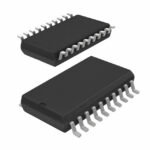 DS2108S
The activity of extra discounts on wholesale prices is in full swing…
Please fill in your contact information and we will send you the latest wholesale price list.





