 ChipApex | Global Electronic Components Supplier
SEARCH
Search Product
Search Post
— IC芯片 | 连接器 | 传感器 | 被动器件 —
Search productSearch post
— IC芯片 | 连接器 | 传感器 | 被动器件 —
Consult the customer manager about the wholesale price.
consultation hotline:86-132-6715-2157
email:[email protected]
Contact the product manager for consultation. One-stop consultation is available.
Do you want a lower wholesale price? Please send us your inquiry and we will reply immediately.
The DS21T05Z+T&R is a SCSI terminator IC compliant with SCSI-1, Fast SCSI, and Ultra SCSI standards. It provides active termination for nine signal lines using laser-trimmed 110-ohm resistors with 5% tolerance. The device operates on a TERMPWR supply voltage ranging from 4.0V to 5.5V. It features a low dropout regulator capable of sourcing at least 24 mA per line when active and sinking 200 mA for actively negated signals. The unit includes onboard thermal shutdown circuitry and a power-down mode that isolates termination resistors from the bus via the PD pin. It is housed in a 16-pin narrow SOIC package.
Verify the specific suffix T&R indicates tape-and-reel packaging configuration. Confirm RoHS compliance status through official manufacturer documentation or authorized distributor declarations. Ensure the ordering part number matches the exact package width (150-mil) required for the target PCB footprint. Cross-reference the manufacturer designation to confirm Analog Devices Inc./Maxim Integrated origin.
Select this component for applications requiring active termination compatible with SCSI-1, Fast SCSI, and Ultra SCSI protocols. It serves as a functionally compatible alternative to the DS21T07, offering relaxed output current and termination tolerances suitable for high-volume designs. Ensure the design accommodates the 16-pin narrow SOIC package dimensions and provides adequate decoupling capacitors on the VREF and TERMPWR pins.
The DS21T05Z+T&R belongs to the DS21T05 family of SCSI terminators manufactured by Analog Devices Inc./Maxim Integrated. It is designed to replace discrete resistor networks with an integrated solution that simplifies board layout and improves noise immunity. The device integrates a bandgap reference and buffer amplifier to maintain stable termination voltages under varying load conditions.
The DS21T07 is a functionally compatible higher-performance alternative. Verify if the relaxed termination tolerances of the DS21T05 meet specific system requirements before substituting.
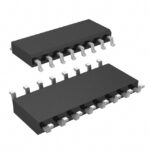 DS21T05Z+T&R
The activity of extra discounts on wholesale prices is in full swing…
Please fill in your contact information and we will send you the latest wholesale price list.





