ChipApex | Global Electronic Components Supplier
SEARCH
Search Product
Search Post
— IC芯片 | 连接器 | 传感器 | 被动器件 —
Search productSearch post
— IC芯片 | 连接器 | 传感器 | 被动器件 —
Consult the customer manager about the wholesale price.
consultation hotline:86-132-6715-2157
email:[email protected]
Contact the product manager for consultation. One-stop consultation is available.
Do you want a lower wholesale price? Please send us your inquiry and we will reply immediately.
The DS90C241IVSX/NOPB is a serializer from Texas Instruments designed for high-speed parallel-to-serial data conversion. It operates within a supply voltage range of 3 V to 3.6 V and supports pixel clock frequencies between 5 MHz and 43 MHz. The device features a 24:1 interface compression ratio, converting 24-bit parallel RGB data into a single LVDS serial output stream. It utilizes an embedded clock with DC balancing to support AC-coupled transmission without requiring a separate reference clock at the receiver end. The component is housed in a 48-pin TQFP package and is rated for operation across a temperature range of -40°C to +105°C.
Verify the specific suffix against official documentation to confirm package type and tape-and-reel specifications. Ensure compatibility with the corresponding deserializer, such as the DS90C124 or DS90UR124, for complete FPD-Link II system integration. Confirm RoHS compliance status and moisture sensitivity level requirements prior to assembly planning.
Select this serializer when interfacing with legacy DS90C241/DS90C124 designs due to backward-compatibility mode support. Choose the IVSX suffix variant if surface-mount reel packaging is required for automated assembly processes. Validate that the host processor can provide the necessary 24-bit parallel RGB data and synchronization signals within the specified frequency limits.
This component belongs to the DS90URxxx-Q1 family of FPD-Link II serializers and deserializers. It serves as the transmitter counterpart to deserializers like the DS90UR124, forming a chipset for automotive display applications. The series is qualified under AEC-Q100 Grade 2 standards, ensuring reliability for harsh automotive environments including extended temperature ranges.
The DS90UR241IVSX/NOPB is the direct successor to the DS90C241IVSX/NOPB. Both devices support backward-compatible mode, allowing the newer serializer to interface with older deserializers. Verify pinout compatibility and software configuration settings when migrating from the C-series to the UR-series components.
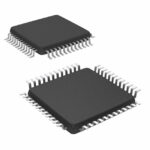 DS90C241IVSX/NOPB
The activity of extra discounts on wholesale prices is in full swing…
Please fill in your contact information and we will send you the latest wholesale price list.