 ChipApex | Global Electronic Components Supplier
SEARCH
Search Product
Search Post
— IC芯片 | 连接器 | 传感器 | 被动器件 —
Search productSearch post
— IC芯片 | 连接器 | 传感器 | 被动器件 —
Consult the customer manager about the wholesale price.
consultation hotline:86-132-6715-2157
email:[email protected]
Contact the product manager for consultation. One-stop consultation is available.
Do you want a lower wholesale price? Please send us your inquiry and we will reply immediately.
The DS90CR483VJDX/NOPB is a low-voltage differential signaling (LVDS) interface integrated circuit manufactured by Texas Instruments. It functions as a 48-bit channel link serializer, converting parallel CMOS or TTL inputs into serial LVDS outputs. The device features eight drivers and supports data rates up to 672 Mb/s. It operates within a supply voltage range of 3 V to 3.6 V, with a typical operating voltage of 3.3 V. The component is housed in a 100-pin TQFP package and is designed for surface-mount installation. It maintains an operating temperature range from -10°C to +70°C and has a maximum power dissipation of 2.3 W.
Verify the obsolete status indicated by the NRND designation before procurement planning. Confirm that the non-lead-free version meets environmental compliance requirements for the target market. Ensure the 100-TQFP footprint matches the PCB layout constraints. Validate that the -10°C to +70°C commercial temperature range satisfies the operational environment specifications.
Select this component when a 48-bit serializer is required for LVDS applications. Compare against the DS90CR285 if fewer channels are sufficient. Consider the DS90CR483VJDX/NOPB only if the specific 100-TQFP package and commercial temperature range align with the design needs. Evaluate the direct replacement availability due to the end-of-life status of the lead-based variant.
This part belongs to the DS90CR483 series of LVDS interface ICs. It serves as the successor to the discontinued DS90CR483VJDX, offering RoHS-compliant manufacturing while maintaining identical electrical characteristics. The series is designed for high-speed data transmission in display and industrial environments.
The DS90CR483VJDX is the direct predecessor and pin-compatible substitute. Verify that the lead-free composition of the NOPB suffix does not impact thermal management requirements compared to the older version.
Yes, the /NOPB suffix indicates that the component is RoHS compliant and lead-free.
The device supports a maximum data rate of 672 Mb/s.
LVDS interfaces typically require external termination resistors across the differential pairs to match the line impedance, though internal biasing may be present.
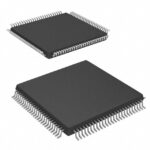 DS90CR483VJDX/NOPB
The activity of extra discounts on wholesale prices is in full swing…
Please fill in your contact information and we will send you the latest wholesale price list.






