 ChipApex | Global Electronic Components Supplier
SEARCH
Search Product
Search Post
— IC芯片 | 连接器 | 传感器 | 被动器件 —
Search productSearch post
— IC芯片 | 连接器 | 传感器 | 被动器件 —
Consult the customer manager about the wholesale price.
consultation hotline:86-132-6715-2157
email:[email protected]
Contact the product manager for consultation. One-stop consultation is available.
Do you want a lower wholesale price? Please send us your inquiry and we will reply immediately.
The DS90CR485VSX/NOPB is a serializer that converts 24 LVCMOS/LVTTL double-edge inputs into 8 Low Voltage Differential Signaling (LVDS) streams. It supports data rates up to 6.384 Gbps with input clocks ranging from 66 MHz to 133 MHz. The device operates on a 2.5V core supply and a 3.3V tolerant I/O supply, housed in a 100-pin TQFP package.
Verify the component matches the specific Texas Instruments part number DS90CR485VSX/NOPB. Confirm the suffix indicates the correct tape and reel packaging variant. Ensure the manufacturer documentation aligns with the requested specifications before finalizing acquisition.
Select this serializer when interfacing wide TTL buses to LVDS links to reduce cabling complexity. Ensure the system design accommodates the required 2.5V and 3.3V power rails. Verify compatibility with downstream receivers such as the DS90CR486 or DS90CR484 for proper deskew initialization.
This component belongs to the National Semiconductor DS90CR485 series of Channel-Link serializers. It is designed to work in conjunction with compatible deserializers to form high-speed serial links. The VSX/NOPB designation specifies the industrial temperature range and lead-free compliant packaging.
The DS90CR485 is backward compatible with the DS90CR482 and DS90CR484 receiver families. Direct pin-compatible replacements within the same family should be verified against the official datasheet for electrical parameter alignment.
Pre-emphasis strength is set by applying a DC voltage level to the PRE pin using an external pull-up resistor to VCC. The resistor value determines the magnitude of dynamic current during data transitions.
The TSEN pin reports the presence of a remote termination resistor. It outputs a low logic state if no termination is detected and a high logic state if a 100 Ω termination is present at the far end of the link.
Asserting the PD pin low activates the power-down function, minimizing power dissipation and shutting down the PLL. The transmitter outputs enter a tri-state condition during this mode.
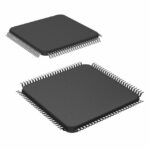 DS90CR485VSX/NOPB
The activity of extra discounts on wholesale prices is in full swing…
Please fill in your contact information and we will send you the latest wholesale price list.





