 ChipApex | Global Electronic Components Supplier
SEARCH
Search Product
Search Post
— IC芯片 | 连接器 | 传感器 | 被动器件 —
Search productSearch post
— IC芯片 | 连接器 | 传感器 | 被动器件 —
Consult the customer manager about the wholesale price.
consultation hotline:86-132-6715-2157
email:[email protected]
Contact the product manager for consultation. One-stop consultation is available.
Do you want a lower wholesale price? Please send us your inquiry and we will reply immediately.
The DS90UB940TNKDRQ1 is a FPD-Link III to CSI-2 deserializer designed for automotive applications. It converts one or two FPD-Link III serial streams into MIPI CSI-2 format, supporting video resolutions up to WUXGA and 1080p60 with 24-bit color depth. The device operates with a pixel clock frequency of up to 170 MHz and supports data rates of 3.36 Gbps. It features two inputs and four outputs, housed in a 64-WQFN (9x9) package. Supply voltages are 1.71V to 1.89V and 3V to 3.6V. The component is AEC-Q100 qualified for Grade 2, functioning within a temperature range of -40°C to 105°C.
Verify the specific suffix DR against the required packaging configuration, as it indicates reel packaging distinct from cut tape variants. Confirm AEC-Q100 Grade 2 qualification aligns with the target automotive environment's thermal requirements. Ensure the 64-WQFN footprint matches the PCB layout specifications. Validate that the input signal source is compatible with FPD-Link III serializers such as the DS90UB947 or DS90UB929 series.
Select this model when a dual-channel FPD-Link III input is required to drive a single CSI-2 output interface. Compare against the DS90UB948TNKDRQ1 if eight LVDS outputs are needed instead of MIPI CSI-2. Consider the DS90UH940TNKDRQ1 if HDCP encryption support is necessary for protected content. Ensure the design accommodates the 1.71V to 1.89V and 3V to 3.6V power domains specified for operation.
This component belongs to the Texas Instruments DS90UB940 family of high-speed video deserializers. It is functionally related to the DS90UB940N-Q1 and DS90UB940TNKDTQ1, differing primarily in packaging and suffix designation. The part serves as a bridge between camera sensors using FPD-Link III and processing units utilizing MIPI CSI-2 interfaces.
DS90UB940TNKDTQ1
The device supports video resolutions up to WUXGA (1920x1200) and 1080p60 with 24-bit color depth.
No, the standard DS90UB940 does not include HDCP support. Models requiring HDCP functionality, such as the DS90UH940N-Q1, should be selected instead.
It provides automatic skew correction capabilities to compensate for mismatches in PCB routing, cable pair lengths, and connector imbalances without requiring special training patterns.
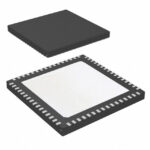 DS90UB940TNKDRQ1
The activity of extra discounts on wholesale prices is in full swing…
Please fill in your contact information and we will send you the latest wholesale price list.







