 ChipApex | Global Electronic Components Supplier
SEARCH
Search Product
Search Post
— IC芯片 | 连接器 | 传感器 | 被动器件 —
Search productSearch post
— IC芯片 | 连接器 | 传感器 | 被动器件 —
Consult the customer manager about the wholesale price.
consultation hotline:86-132-6715-2157
email:[email protected]
Contact the product manager for consultation. One-stop consultation is available.
Do you want a lower wholesale price? Please send us your inquiry and we will reply immediately.
The DS90UR904QSQE/NOPB is a display interface integrated circuit manufactured by Texas Instruments, designed for automotive applications. It functions as an FPD-Link II converter, transforming high-speed serial video data into parallel LVDS outputs. The device supports up to 24-bit color depth and operates within a frequency range of 5 MHz to 65 MHz. It is housed in a WQFN-36 package and complies with AEC-Q100 standards. The component operates on a single 1.8 V power supply, with a specified operating temperature range from -40°C to +105°C, ensuring reliability in demanding vehicular environments.
Verify the specific suffix against official Texas Instruments documentation to confirm package type and tape-and-reel specifications. Ensure the component meets AEC-Q100 Grade 1 requirements for your target automotive application. Cross-reference the datasheet revision date to confirm compatibility with existing design files and avoid discrepancies in pinout or electrical characteristics during procurement.
Select this component when a bridge between FPD-Link II serializers and parallel display panels is required. It is suitable for designs needing 24-bit color support at frequencies up to 65 MHz. Consider the WQFN-36 footprint for space-constrained PCB layouts. Verify that the downstream display controller accepts the parallel LVDS signals generated by this converter before finalizing the bill of materials.
This part belongs to the DS90UR90xQ family of FPD-Link II converters. It shares functional similarities with the DS90UR907Q and DS90UR908Q but differs in package count and specific pin configurations. While related to the DS90UB904Q deserializer, it serves as a transmitter-side converter rather than a receiver. All members of this series are engineered for automotive-grade reliability and noise immunity.
The DS90UR907QSQE/NOPB is a documented alternative within the same product family. Both devices serve as FPD-Link II converters with similar electrical characteristics. Verify pin-to-pin compatibility and package dimensions (WQFN-36 vs WQFN-48) before substitution. Consult the official datasheet for any differences in control register maps or maximum operating frequencies.
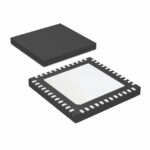 DS90UR904QSQE/NOPB
The activity of extra discounts on wholesale prices is in full swing…
Please fill in your contact information and we will send you the latest wholesale price list.





