 ChipApex | Global Electronic Components Supplier
SEARCH
Search Product
Search Post
— IC芯片 | 连接器 | 传感器 | 被动器件 —
Search productSearch post
— IC芯片 | 连接器 | 传感器 | 被动器件 —
Consult the customer manager about the wholesale price.
consultation hotline:86-132-6715-2157
email:[email protected]
Contact the product manager for consultation. One-stop consultation is available.
Do you want a lower wholesale price? Please send us your inquiry and we will reply immediately.
The DS92LV0411SQX/NOPB is a serializer from Texas Instruments designed for high-speed parallel-to-serial data conversion. It accepts four LVDS input channels and converts them into a single CML output stream. The device supports data rates up to 1.4 Gb/s per channel, enabling efficient transmission of video or sensor data over long distances. It operates within a supply voltage range of 1.7 V to 3.6 V and functions reliably across an industrial temperature range of -40°C to +85°C. Housed in a compact 36-pin WQFN package, it integrates necessary clock recovery mechanisms for robust signal integrity in demanding electronic environments.
Verify the exact part number suffix against official Texas Instruments documentation to ensure correct package type and RoHS compliance status. Confirm moisture sensitivity level handling requirements prior to assembly. Check current production lifecycle status to avoid obsolescence risks during long-term manufacturing planning. Ensure compatibility with existing PCB footprint designs for the 36-WQFN package.
Select this component when four-channel LVDS serialization is required for high-bandwidth applications. Compare against other serializers based on specific input/output interface compatibility and maximum supported data rate. Evaluate power consumption constraints relative to the 1.7 V to 3.6 V operating range. Consider thermal dissipation capabilities within the WQFN-36 enclosure for dense board layouts.
This device belongs to the DS92LV04xx series of serializers from Texas Instruments. It complements deserializers like the DS92LV0412 to form complete point-to-point links. The series is engineered for low-power, high-speed data transfer in professional display and industrial control sectors. It serves as a critical interface bridge between parallel source devices and serial transmission lines.
Direct pin-compatible substitutes may include other members of the DS92LV04xx family with matching I/O counts. Verify electrical specifications such as data rate limits and voltage tolerances before substitution. Consult official cross-reference lists for qualified alternative sources ensuring identical functional performance.
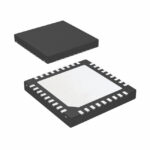 DS92LV0411SQX/NOPB
The activity of extra discounts on wholesale prices is in full swing…
Please fill in your contact information and we will send you the latest wholesale price list.





