 ChipApex | Global Electronic Components Supplier
SEARCH
Search Product
Search Post
— IC芯片 | 连接器 | 传感器 | 被动器件 —
Search productSearch post
— IC芯片 | 连接器 | 传感器 | 被动器件 —
Consult the customer manager about the wholesale price.
consultation hotline:86-132-6715-2157
email:[email protected]
Contact the product manager for consultation. One-stop consultation is available.
Do you want a lower wholesale price? Please send us your inquiry and we will reply immediately.
The DS92LV1021TMSA is a 10-bit Bus LVDS serializer manufactured by Texas Instruments. It converts a 10-bit parallel LVCMOS/LVTTL data bus into a single high-speed serial LVDS stream with an embedded clock. The device operates at clock frequencies between 16 MHz and 40 MHz, achieving a payload data rate of up to 400 Mbps. It utilizes a 28-lead SSOP package and functions within a supply voltage range of 3.0 V to 3.6 V. The operating temperature range spans from -40°C to +85°C.
Verify component authenticity through authorized distributors or TI directly. Confirm RoHS compliance status as older revisions may differ. Check for obsolescence notices since this part number is listed as Not Recommended for New Designs in some contexts. Ensure proper ESD handling protocols are followed during storage and assembly due to MOS gate sensitivity.
Select this serializer when interfacing 10-bit parallel buses to LVDS links. Ensure the system clock frequency falls within the 16 MHz to 40 MHz range. Verify that the load impedance matches the specified 27Ω to 100Ω requirements. Consider pairing with compatible deserializers like the DS92LV1212A for complete link functionality.
This component belongs to the DS92LV1021 family of Bus LVDS serializers. It serves as an upgrade to the original DS92LV1021, offering improved features such as TCLK application before power-up and slower edge rates to reduce reflections. It is designed for high-speed data transfer applications requiring reliable serialization of parallel data streams.
The SN65LV1023ADB is documented as a similar replacement option. Verify functional compatibility and pinout alignment before substitution. Review datasheet specifications for both devices to ensure performance parameters meet design requirements.
It appends a start bit and a stop bit internally to frame the 10 data bits, creating a 12-bit cycle where the start and stop bits function as embedded clock transitions.
Asserting the SYNC1 or SYNC2 pins causes the serializer to transmit synchronization patterns (six ones and six zeros) to help the deserializer establish lock.
Yes, the serializer is designed to drive data over Unshielded Twisted Pair (UTP) cable in addition to backplanes.
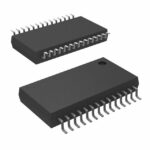 DS92LV1021TMSA
The activity of extra discounts on wholesale prices is in full swing…
Please fill in your contact information and we will send you the latest wholesale price list.





