 ChipApex | Global Electronic Components Supplier
SEARCH
Search Product
Search Post
— IC芯片 | 连接器 | 传感器 | 被动器件 —
Search productSearch post
— IC芯片 | 连接器 | 传感器 | 被动器件 —
Consult the customer manager about the wholesale price.
consultation hotline:86-132-6715-2157
email:[email protected]
Contact the product manager for consultation. One-stop consultation is available.
Do you want a lower wholesale price? Please send us your inquiry and we will reply immediately.
The DS92LV1212AMSA/NOPB is a 10-bit Bus LVDS deserializer designed for serial-to-parallel conversion. It operates with a clock frequency range of 16 MHz to 40 MHz, supporting a maximum serial bandwidth of 400 Mbps and a payload rate of up to 480 Mbps. The device accepts a single differential Bus LVDS input pair (RI+, RI-) and outputs 10 parallel CMOS/LVTTL data lines plus a recovered clock. It functions within a supply voltage range of 3.0 V to 3.6 V and supports an operating temperature range from -40°C to +85°C. The component utilizes embedded clock recovery without requiring synchronization patterns.
Verify the MSA package designation matches the required footprint. Confirm the NOPB suffix indicates lead-free compliance. Ensure the REFCLK signal meets the specified duty cycle and transition time requirements before ordering.
Select this component when a 10-bit parallel interface is required alongside embedded clock recovery. Verify that the system can provide a stable reference clock at the REFCLK pin. Consider the 400 Mbps bandwidth limit when designing for higher throughput scenarios.
This device is an upgrade of the DS92LV1212, maintaining all original features while improving input threshold sensitivity. It is part of the DS92LV chipset family, specifically designed to pair with the DS92LV1021 serializer for efficient serial data transmission over Bus LVDS links.
The DS92LV1212AMSA serves as the direct predecessor. Both share identical functionality and pinouts. Verify that any replacement maintains the same MSA package dimensions and electrical characteristics for seamless integration.
When the Deserializer loses lock, the LOCK output goes high and outputs enter TRI-STATE. Up to three cycles of previously received data may be invalid due to detection delay.
The RCLK_R/F pin controls the polarity of the recovered clock edge used to strobe the ROUT data. High selects the rising edge, and low selects the falling edge.
Yes, it supports random lock, allowing it to synchronize to a data stream without special SYNC patterns, which facilitates hot insertion into running busses.
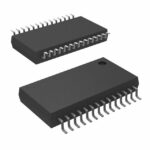 DS92LV1212AMSA/NOPB
The activity of extra discounts on wholesale prices is in full swing…
Please fill in your contact information and we will send you the latest wholesale price list.






