 ChipApex | Global Electronic Components Supplier
SEARCH
Search Product
Search Post
— IC芯片 | 连接器 | 传感器 | 被动器件 —
Search productSearch post
— IC芯片 | 连接器 | 传感器 | 被动器件 —
Consult the customer manager about the wholesale price.
consultation hotline:86-132-6715-2157
email:[email protected]
Contact the product manager for consultation. One-stop consultation is available.
Do you want a lower wholesale price? Please send us your inquiry and we will reply immediately.
The DS92LV1212AMSA is a 10-bit Bus LVDS deserializer designed to receive serial data streams and transform them into a parallel data bus with an embedded clock recovery mechanism. It operates within a frequency range of 16 MHz to 40 MHz, supporting a maximum serial bandwidth of 400 Mbps at the upper limit. The device features random lock capability, allowing synchronization without specific SYNC patterns, which facilitates hot insertion into running backplanes. It utilizes a single differential pair for input, eliminating multi-channel skew issues common in parallel interfaces. The component includes a powerdown mode to reduce supply current when inactive.
Verify the datasheet version and revision history before integration, as specifications may evolve. Confirm that the MSA28 package footprint matches your PCB layout requirements. Ensure the design accounts for the recommended operating conditions, specifically the 3.0V to 3.6V supply voltage range and the -40°C to +85°C temperature span. Check for any end-of-life notices or obsolescence status directly from the manufacturer.
Select this component when a low-power, high-speed serial-to-parallel conversion is required with minimal trace count. It is suitable for systems needing open-loop synchronization or hot-pluggable functionality. Compare against the DS92LV1210 if higher noise margin is not critical, or consider the DS92LV1224 for higher frequency requirements up to 66 MHz. Ensure the paired serializer supports the Bus LVDS protocol.
The DS92LV1212AMSA is part of the National Semiconductor (now Texas Instruments) Bus LVDS family. It serves as the receiver counterpart to serializers like the DS92LV1021. This chipset approach reduces the complexity of high-speed parallel interfaces by converting them to a single differential pair. The 'MSA' suffix indicates the 28-lead SSOP package type.
The DS92LV1212A is the direct upgrade to the DS92LV1212, maintaining feature compatibility. For pin-compatible alternatives, consider the DS92LV1210, though it lacks some sensitivity improvements. Verify electrical characteristics and timing parameters against the original design requirements when substituting.
The device can attain lock to a data stream without requiring special SYNC patterns. This allows operation in open-loop applications and supports hot insertion. Lock time varies based on the initial phase relation and data stream characteristics.
The REFCLK pin supplies a reference clock signal for the internal PLL frequency. It must be running before the Deserializer powers up to allow proper synchronization to the incoming data stream.
Circuitry detects repetitive multi-transition (RMT) patterns where more than one Low-High transition occurs in a clock cycle. Upon detection, the LOCK output remains inactive until the pattern changes, preventing the device from locking to data bits instead of the clock.
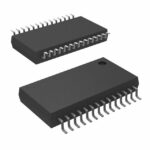 DS92LV1212AMSA
The activity of extra discounts on wholesale prices is in full swing…
Please fill in your contact information and we will send you the latest wholesale price list.





