ChipApex | Global Electronic Components Supplier
SEARCH
Search Product
Search Post
— IC芯片 | 连接器 | 传感器 | 被动器件 —
Search productSearch post
— IC芯片 | 连接器 | 传感器 | 被动器件 —
Consult the customer manager about the wholesale price.
consultation hotline:86-132-6715-2157
email:[email protected]
Contact the product manager for consultation. One-stop consultation is available.
Do you want a lower wholesale price? Please send us your inquiry and we will reply immediately.
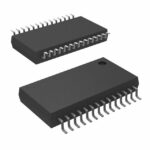
The DS92LV1224TMSAX/NOPB is a 30-66 MHz, 10-bit Bus LVDS deserializer manufactured by Texas Instruments. It converts a serial data stream into a 10-bit parallel bus with a throughput of 300 to 660 Mb/s. The device operates on a single 3.3 V supply (3.0 V to 3.6 V) and consumes less than 300 mW at 66 MHz. It features a 28-lead SSOP package and supports an operating temperature range from -40°C to +85°C.
Verify component authenticity through authorized channels. Confirm the specific ordering suffix matches the required package and temperature grade. Check for RoHS compliance documentation. Ensure the part number corresponds to the exact revision required for your design specifications.
Select this component when a 1:10 deserialization ratio is required for 10-bit wide data buses. Ensure the system utilizes a compatible serializer, such as the DS92LV1023E, to form a complete chipset. Verify that the application environment stays within the specified -40°C to +85°C temperature limits.
This device belongs to the DS92LV1224 series of LVDS interface integrated circuits. It is designed to work in conjunction with compatible serializers to simplify PCB layout by narrowing data paths. The series focuses on reducing PCB size and layer count while maintaining high-speed signal integrity.
The SN65LV1224BDBG4 is a documented alternative within the same product family. Verify pinout compatibility and electrical characteristics before substitution. Ensure the replacement meets the specific frequency and voltage requirements of the original design.
If the Deserializer loses lock, the LOCK output goes high and outputs enter TRI-STATE. The system can detect this state and pulse the Serializer's SYNC inputs to resynchronize the devices.
The RCLK_R/F pin selects the active edge of the recovered clock used to strobe the ROUT data. A high level selects the rising edge, while a low level selects the falling edge.
Yes, the device supports hot insertion into a running backplane using its random lock capability, provided proper grounding and power sequencing rules are followed.
 DS92LV1224TMSAX/NOPB
The activity of extra discounts on wholesale prices is in full swing…
Please fill in your contact information and we will send you the latest wholesale price list.