ChipApex | Global Electronic Components Supplier
SEARCH
Search Product
Search Post
— IC芯片 | 连接器 | 传感器 | 被动器件 —
Search productSearch post
— IC芯片 | 连接器 | 传感器 | 被动器件 —
Consult the customer manager about the wholesale price.
consultation hotline:86-132-6715-2157
email:[email protected]
Contact the product manager for consultation. One-stop consultation is available.
Do you want a lower wholesale price? Please send us your inquiry and we will reply immediately.
The DS99R104TVS/NOPB is a high-speed deserializer manufactured by Texas Instruments, designed for FPD-Link II applications. It converts one differential LVDS input channel into twenty-four parallel LVCMOS outputs. The device supports data rates up to 960 Mbps with an operating supply voltage range of 3V to 3.6V. It is housed in a 48-TQFP package measuring 7x7 mm and operates within a temperature range of -40°C to 85°C. This component facilitates long-distance transmission of video and control signals in automotive and industrial environments.
This component has reached end-of-life status, with discontinuance notifications issued in August 2024. Availability is restricted to remaining stock from authorized distributors or surplus markets. Engineers must verify the authenticity of existing inventory due to the obsolescence status. Design-in activities should prioritize immediate transition to alternative solutions to ensure long-term supply chain stability.
Designers requiring active sourcing should evaluate successor devices within the DS99R series or newer FPD-Link generations. Compatibility checks are necessary when migrating to replacement parts, as pinouts and electrical characteristics may differ. Verify that the selected substitute maintains support for the required data rate and output configuration to ensure seamless integration into existing system architectures without extensive redesign.
The DS99R104 belongs to Texas Instruments' FPD-Link II family, which established standards for point-to-point video transmission in vehicles. This specific model serves as the receiver counterpart to serializers like the DS90UR104. It was widely adopted in automotive display interfaces before being superseded by higher-bandwidth technologies offering greater channel density and integrated features.
Publicly confirmed substitutes include the DS99R104TSQX/NOPB, which offers identical functionality in a WQFN package. Other potential replacements within the broader FPD-Link ecosystem require careful evaluation of pin compatibility and signal integrity requirements.
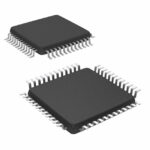 DS99R104TVS/NOPB
The activity of extra discounts on wholesale prices is in full swing…
Please fill in your contact information and we will send you the latest wholesale price list.