 ChipApex | Global Electronic Components Supplier
SEARCH
Search Product
Search Post
— IC芯片 | 连接器 | 传感器 | 被动器件 —
Search productSearch post
— IC芯片 | 连接器 | 传感器 | 被动器件 —
Consult the customer manager about the wholesale price.
consultation hotline:86-132-6715-2157
email:[email protected]
Contact the product manager for consultation. One-stop consultation is available.
Do you want a lower wholesale price? Please send us your inquiry and we will reply immediately.
The DSC613RI3A-010UT is a three-output low-power MEMS clock generator manufactured by Microchip Technology. It operates within a supply voltage range of 1.71V to 3.63V and supports output frequencies from 2 kHz to 100 MHz. The device features an input-to-output ratio of 1:3 with LVCMOS outputs. It utilizes a 6-VFLGA package measuring 2x1.6 mm, designed for surface mount installation. The component functions without external crystals or reference clocks, offering a frequency stability of ±20 ppm across an operating temperature range of -40°C to +85°C.
Verify that the specific suffix 'UT' corresponds to the tape and reel packaging configuration as documented in official Microchip datasheets. Confirm that the order quantity aligns with standard reel specifications. Ensure the requested part number matches the exact electrical parameters and package dimensions listed in the manufacturer's specification sheet to avoid compatibility issues during assembly.
Select this component when design requirements necessitate a compact, low-power clock solution without external resonators. Consider the 1.71V to 3.63V supply range for compatibility with various logic levels. Evaluate the ±20 ppm stability against system jitter requirements. Ensure the 6-pin VFLGA footprint fits within the available PCB area and thermal constraints for the target application environment.
This device belongs to the DSC613 series of MEMS clock generators, which are engineered to replace traditional quartz-based oscillators. The series emphasizes reduced power consumption and smaller physical footprints. It integrates phase-locked loop functionality within a silicon microelectromechanical structure, providing robust performance in industrial and automotive environments while maintaining high reliability standards.
Consult Microchip documentation for direct cross-reference alternatives within the DSC613 family. Verify pinout compatibility and electrical parameter equivalence before substituting. Generic oscillator replacements may not match the MEMS-based integration or specific output configurations required for this circuit.
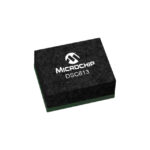 DSC613RI3A-010UT
The activity of extra discounts on wholesale prices is in full swing…
Please fill in your contact information and we will send you the latest wholesale price list.





