 ChipApex | Global Electronic Components Supplier

SEARCH
Search Product
Search Post
— IC芯片 | 连接器 | 传感器 | 被动器件 —
Search productSearch post
— IC芯片 | 连接器 | 传感器 | 被动器件 —
Consult the customer manager about the wholesale price.
consultation hotline:86-132-6715-2157
email:[email protected]
Contact the product manager for consultation. One-stop consultation is available.
Do you want a lower wholesale price? Please send us your inquiry and we will reply immediately.
The DSC8123DI5T is an unprogrammed MEMS oscillator from Microchip Technology, designed for flexible frequency generation. It supports a frequency range of 10 MHz to 460 MHz with a stability of 10 ppm. The device operates on a supply voltage between 2.25 V and 3.6 V, drawing a maximum current of 29 mA. It features LVDS output format and is housed in a compact 6-SMD, No Lead package measuring 2.5 mm by 2 mm with a height of 0.85 mm. The component functions within a temperature range of -40°C to +85°C and includes a load capacitance of 2 pF.
Verify the specific programming requirements before integration, as this is an unprogrammed blank oscillator. Confirm that the design environment supports the required LVDS signal integrity standards. Ensure the PCB footprint matches the 6-SMD No Lead dimensions precisely. Check humidity sensitivity handling procedures during assembly to maintain component reliability. Validate supply voltage levels against the specified 2.25 V to 3.6 V operational window.
Choose this component when a customizable frequency solution is needed within a small form factor. It is suitable for designs requiring LVDS outputs and industrial temperature resilience. Consider the programming process if fixed frequencies are not predetermined. Compare power consumption metrics against other MEMS options if energy efficiency is critical. Ensure the application does not require pre-programmed factory settings.
This part belongs to the DSC8123 series of programmable MEMS oscillators. It shares architectural similarities with other members like the DSC8123BI5 but differs in package type and programming status. The series emphasizes miniaturization and flexibility for modern electronic designs. It replaces traditional crystal oscillators where size and configurability are paramount.
Direct substitutes include other unprogrammed MEMS oscillators from Microchip with similar LVDS outputs and frequency ranges. Verify package compatibility when considering alternatives from different manufacturers. Cross-reference electrical specifications such as supply voltage and stability to ensure functional equivalence.
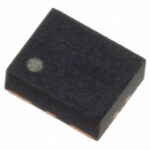 DSC8123DI5T

The activity of extra discounts on wholesale prices is in full swing…
Please fill in your contact information and we will send you the latest wholesale price list.





