ChipApex | Global Electronic Components Supplier

SEARCH
Search Product
Search Post
Search productSearch post
Consult the customer manager about the wholesale price.
consultation hotline:86-132-6715-2157
email:[email protected]
Contact the product manager for consultation. One-stop consultation is available.
Do you want a lower wholesale price? Please send us your inquiry and we will reply immediately.
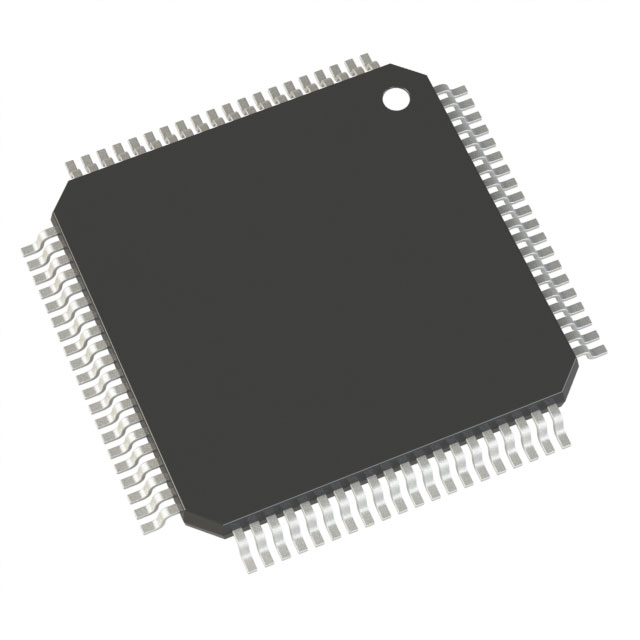
DSPIC33CK256MP508-E/PT is listed in the Microcontrollers range at ChipApex. The manufacturer field lists Microchip Technology. Its product description is IC MCU 16BIT 256KB FLASH 80TQFP. Review the specifications below when checking this part for your BOM.
The dsPIC33CK256MP508-E/PT is a 16-bit Digital Signal Controller from the dsPIC33CK family, manufactured by Microchip Technology. It features a single-core architecture with a maximum clock frequency of 100 MHz. The device integrates 256 kB of Flash program memory and 24 kB of data RAM. It operates within a supply voltage range of 3 V to 3.6 V and supports an industrial temperature range from -40°C to +85°C. The component is housed in a 48-pin TQFP package and includes interfaces such as CAN FD, I2C, SPI, and UART.
Verify silicon revision B5 compatibility when sourcing this part. Review Silicon Errata DS80000796Q for known issues affecting I2C, UART, and oscillator modules. Implement recommended workarounds for specific peripheral behaviors, particularly regarding bus collision handling and clock source selection. Confirm that the extended temperature variant meets your thermal requirements.
Select this controller for applications demanding high-performance DSP processing alongside flexible MCU capabilities. Ensure design accounts for errata-related workarounds in software, especially for I2C noise immunity and UART buffer management. Verify power supply stability to avoid Brown-out Reset anomalies during voltage transitions. Consider the available pin count and peripheral set against system interface requirements.
This device belongs to the dsPIC33CK256MP508 family, which shares architectural similarities with other members like the dsPIC33CK128MP508. The family is designed for complex control loops and signal processing tasks. The '-E' suffix typically denotes an extended temperature rating, while '/PT' indicates the 48-pin TQFP package type.
Consult Microchip documentation for direct pin-to-pin or functional substitutes within the dsPIC33CK series. Verify memory size and peripheral availability when considering alternatives like the dsPIC33CK128MP508 or dsPIC33CK256MP506.
Due to silicon errata, the Bus Collision Detect bit cannot be cleared normally. Disable the I2C module, clear the bit, and re-enable it, or distinguish false collisions by prioritizing interrupts correctly.
The OERR bit cannot be cleared by software once set. Prevent overflow by reading received data immediately upon each byte reception or disable and enable the UART module to reset the error state.
Yes, using the internal FRC Oscillator with the Primary PLL may cause the FRCDIVN to drive the PLL instead of the FRC. Maintain FRCDIV bits as zero to ensure the minimum PLL input requirement is met.
Explore related parts through Embedded, Integrated Circuits (ICs), all product categories, ChipApex homepage.
 DSPIC33CK256MP508-E/PT

The activity of extra discounts on wholesale prices is in full swing…
Please fill in your contact information and we will send you the latest wholesale price list.