 ChipApex | Global Electronic Components Supplier
SEARCH
Search Product
Search Post
— IC芯片 | 连接器 | 传感器 | 被动器件 —
Search productSearch post
— IC芯片 | 连接器 | 传感器 | 被动器件 —
Consult the customer manager about the wholesale price.
consultation hotline:86-132-6715-2157
email:[email protected]
Contact the product manager for consultation. One-stop consultation is available.
Do you want a lower wholesale price? Please send us your inquiry and we will reply immediately.
The DZ23C6V8HE3-TP is a dual Zener diode array manufactured by Micro Commercial Components (MCC) in an SOT-23 surface-mount package. It features a common cathode configuration with two independent diodes housed in a single case. The nominal Zener voltage is 6.8 V, with a tolerance of ±5% and a maximum dynamic impedance of 8 Ω at a test current of 5 mA. The device supports a maximum power dissipation of 300 mW and operates within a junction temperature range of -55°C to +150°C. It is AEC-Q101 qualified and RoHS compliant.
Verify authenticity through authorized MCC distributors to avoid counterfeit components. Confirm that the ordering suffix indicates RoHS compliance and tape-and-reel packaging. Ensure the specific part number matches the required 6.8 V specification before procurement. Request traceability documentation to validate manufacturing origin and quality standards.
Select this component when a matched pair of Zener diodes is required in a minimal footprint. The common cathode arrangement is suitable for differential signaling or balanced protection schemes. Verify that the 300 mW power rating meets the thermal requirements of the target application environment.
This component belongs to the DZ23C series of dual Zener arrays from Micro Commercial Components. The series covers a wide voltage range from 2.4 V to 47 V, all sharing the same SOT-23 form factor. The HE3 designation typically denotes enhanced efficiency or specific material properties within the manufacturer's lineup.
Direct substitutes include other dual Zener arrays with identical pinouts and electrical characteristics. Verify that any replacement maintains the common cathode configuration and ±5% voltage tolerance. Ensure the alternative component also meets AEC-Q101 standards if used in automotive contexts.
The maximum reverse leakage current is 0.1 µA when measured at a reverse voltage of 3.0 V.
The device has a thermal resistance of 417°C/W from junction to ambient and can operate at junction temperatures up to 150°C.
Yes, the datasheet specifies that the difference in Zener voltage (ΔVz) for both diodes within one case is less than or equal to 5%.
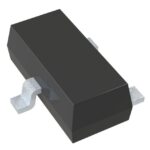 DZ23C6V8HE3-TP
The activity of extra discounts on wholesale prices is in full swing…
Please fill in your contact information and we will send you the latest wholesale price list.




