 ChipApex | Global Electronic Components Supplier

SEARCH
Search Product
Search Post
— IC芯片 | 连接器 | 传感器 | 被动器件 —
Search productSearch post
— IC芯片 | 连接器 | 传感器 | 被动器件 —
Consult the customer manager about the wholesale price.
consultation hotline:86-132-6715-2157
email:[email protected]
Contact the product manager for consultation. One-stop consultation is available.
Do you want a lower wholesale price? Please send us your inquiry and we will reply immediately.
The E-L5973D is an evaluation board based on the L5973D monolithic step-down switching regulator. It features a P-channel D-MOS power element with a 2 A DC output current capability and a 4 V to 36 V input voltage range. The device operates at an internal oscillator frequency of 250 kHz, with a synchronization pin supporting up to 700 kHz. Key electrical parameters include a minimum switch current limit of 2.5 A, adjustable output voltage from 1.235 V to 36 V, and a static current of 300 uA.
Verify that the specific part number corresponds to the STEVAL-ISA101V1 demonstration board, as the E-L5973D designation may refer to the evaluation kit rather than the standalone IC. Confirm RoHS compliance status and check for any specific packaging requirements associated with the evaluation hardware before finalizing procurement orders.
Select this component when evaluating the L5973D regulator's performance in applications requiring high efficiency and robust protection features. The P-channel architecture simplifies driving stage design by removing bootstrap requirements. Ensure the application benefits from the 250 kHz fixed frequency or requires synchronization capabilities up to 700 kHz.
This evaluation board utilizes the L5973D, a BCD5 technology-based monolithic switching regulator. The L5973D series is designed for high-current applications, delivering over 2 A DC while maintaining a compact footprint. It serves as a reference design platform for engineers developing efficient DC/DC conversion solutions within the specified voltage and current limits.
Public confirmed substitute part numbers are not available in the provided documentation. For direct replacements, consult official STMicroelectronics resources for compatible buck regulators with similar input ranges and current capabilities.
No, the embedded P-channel D-MOS power element does not require a bootstrap capacitor, allowing for simpler driving stage design and duty cycles up to 100%.
The internal oscillator fixes the switching frequency at 250 kHz, but a synchronization pin is available to support higher frequencies up to 700 kHz.
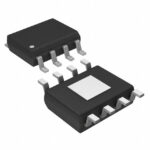 E-L5973D

The activity of extra discounts on wholesale prices is in full swing…
Please fill in your contact information and we will send you the latest wholesale price list.





