 ChipApex | Global Electronic Components Supplier
SEARCH
Search Product
Search Post
— IC芯片 | 连接器 | 传感器 | 被动器件 —
Search productSearch post
— IC芯片 | 连接器 | 传感器 | 被动器件 —
Consult the customer manager about the wholesale price.
consultation hotline:86-132-6715-2157
email:[email protected]
Contact the product manager for consultation. One-stop consultation is available.
Do you want a lower wholesale price? Please send us your inquiry and we will reply immediately.
The E-L6258EX is a dual full-bridge motor driver implemented in BCD technology, designed for controlling bipolar stepper motors or bidirectional DC motors. It features a DMOS power stage capable of sustaining up to 40V with a continuous output current of 1.5A per winding and peak start-up currents up to 2A. The device operates within a supply voltage range of 12V to 40V and includes integrated recirculation diodes. Key electrical parameters include a typical switching frequency of 18.5kHz, a maximum collector-emitter voltage of 40V, and an operating temperature range from -55°C to 150°C. The component is housed in a 36-pin PowerSO package.
Verify the active status of the E-L6258EX prior to procurement, as official documentation indicates it may be obsolete or discontinued. Confirm availability through authorized distributors and check for parameter-equivalent alternatives such as the E-L6258E or E-L6258EA if direct sourcing is unavailable. Ensure all technical specifications align with current design requirements before finalizing orders.
Select this component for applications requiring high-current driving capabilities with integrated protection features. The wide voltage range and four-quadrant control make it suitable for diverse motor types. Consider the thermal management requirements due to the 150°C junction temperature limit. Verify compatibility with existing logic levels given the TTL/CMOS input interface.
The E-L6258EX belongs to the L6258 series of universal motor drivers by STMicroelectronics. It utilizes DMOS technology to provide robust performance in motor control applications. The device integrates both control and power stages, simplifying system design by reducing the need for external components. It is part of a broader family of motor drivers offering various current and voltage ratings.
Public confirmed substitute part numbers include E-L6258E and E-L6258EA. These are listed as parameter-equivalent replacements. Verify pinout and specification compatibility when transitioning to these alternatives.
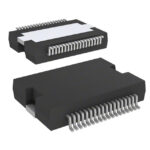 E-L6258EX
The activity of extra discounts on wholesale prices is in full swing…
Please fill in your contact information and we will send you the latest wholesale price list.





