 ChipApex | Global Electronic Components Supplier
SEARCH
Search Product
Search Post
— IC芯片 | 连接器 | 传感器 | 被动器件 —
Search productSearch post
— IC芯片 | 连接器 | 传感器 | 被动器件 —
Consult the customer manager about the wholesale price.
consultation hotline:86-132-6715-2157
email:[email protected]
Contact the product manager for consultation. One-stop consultation is available.
Do you want a lower wholesale price? Please send us your inquiry and we will reply immediately.
The L6562D is a current-mode Power Factor Correction (PFC) controller operating in Transition Mode (TM), manufactured by STMicroelectronics. It is designed for PFC pre-regulators and features a proprietary multiplier design to minimize Total Harmonic Distortion (THD) of AC input current. The device includes an adjustable output overvoltage protection circuit, an on-chip filter for the current sense signal, and a disable function. It utilizes BCD technology and offers an extended IC supply voltage range with ultra-low start-up current (≤70 μA) and low quiescent current (≤4 mA). The internal reference voltage maintains 1% accuracy at Tj = 25 °C.
Verify the component status carefully before procurement. Official documentation indicates the L6562 series may be classified as Not Recommended for New Designs (NRND). Confirm availability through authorized distributors and ensure the specific package variant matches the required footprint. Review the latest datasheet revision for any updates to electrical characteristics or pin compatibility with predecessor models like the L6561.
Select this controller for applications requiring transition-mode PFC operation with high efficiency and low harmonic distortion. It is suitable for designs where cost-effective implementation of power factor correction is prioritized. Ensure the external components support the extended supply voltage range and that the thermal management accommodates the operating temperature limits specified in the datasheet.
The L6562D belongs to the L6562 family of PMICs from STMicroelectronics, specifically categorized under Power Factor Correction controllers. It is implemented in SOIC-8 packages and is part of the company's ECOPACK line. The device serves as a direct pin-to-pin compatible successor to the L6561, offering improved performance metrics while maintaining interface consistency for legacy designs.
The L6562D is pin-to-pin compatible with the L6561. Designers transitioning from the L6561 should verify that the improved performance characteristics align with their system requirements without necessitating layout changes.
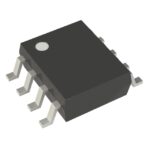 E-L6562D
The activity of extra discounts on wholesale prices is in full swing…
Please fill in your contact information and we will send you the latest wholesale price list.





