ChipApex | Global Electronic Components Supplier
SEARCH
Search Product
Search Post
— IC芯片 | 连接器 | 传感器 | 被动器件 —
Search productSearch post
— IC芯片 | 连接器 | 传感器 | 被动器件 —
Consult the customer manager about the wholesale price.
consultation hotline:86-132-6715-2157
email:[email protected]
Contact the product manager for consultation. One-stop consultation is available.
Do you want a lower wholesale price? Please send us your inquiry and we will reply immediately.
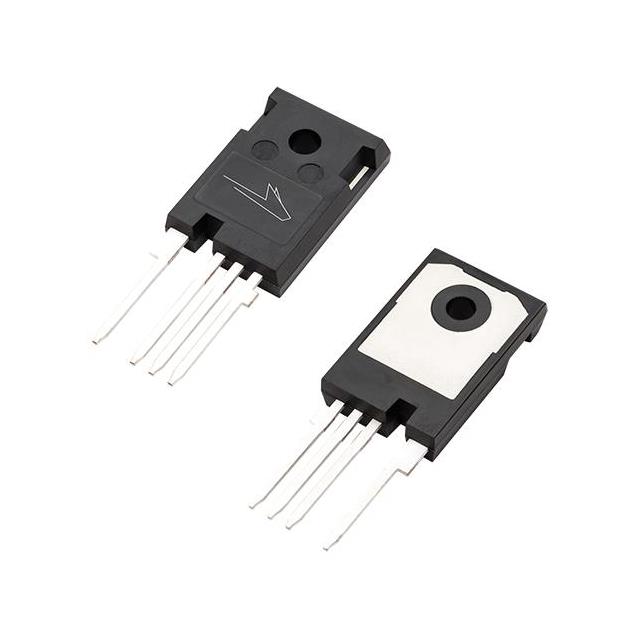
The Wolfspeed E3M0040120K is a third-generation silicon carbide (SiC) MOSFET in a TO-247-4 package. It features a drain-source breakdown voltage of 1200 V and a maximum on-resistance of 40 mΩ at 25°C. The device supports a continuous drain current of 57 A and operates within a junction temperature range of -55°C to +175°C. Key electrical parameters include a gate threshold voltage of 3.6 V, total gate charge of 94 nC, and power dissipation of 242 W. It is designed for high-voltage, high-temperature applications with automotive qualification.
Verify the specific suffix 'K' corresponds to the required tape-and-reel or tube packaging configuration as defined by Wolfspeed. Confirm that the component meets the AEC-Q101 reliability standards required for your specific automotive application tier. Ensure the ordering information matches the exact TO-247-4 lead frame and pinout specifications provided in the official datasheet to prevent integration errors.
Select this component when designing systems requiring 1200V blocking capability with minimal conduction losses. The 40 mΩ Rds(on) offers a balance between efficiency and cost for medium-power applications. Consider the TO-247-4 package for through-hole mounting solutions where thermal management via extruded heatsinks is feasible. Evaluate the 57 A continuous current rating against peak load requirements to ensure adequate safety margins.
This part belongs to Wolfspeed's E-Series, which expands their silicon carbide portfolio with automotive-grade, moisture-resistant devices. The E-Series complements the established C-Series and C3M product lines, offering enhanced ruggedness and lower switching losses. It is designed to support the growing demand for efficient power conversion in electric mobility and renewable energy infrastructure.
Direct replacements include the C3M0040120K from the same manufacturer family. Verify pin compatibility and thermal characteristics before substitution. Other Wolfspeed SiC MOSFETs with similar voltage and resistance ratings may serve as alternatives if form-factor constraints allow.
 E3M0040120K
The activity of extra discounts on wholesale prices is in full swing…
Please fill in your contact information and we will send you the latest wholesale price list.