 ChipApex | Global Electronic Components Supplier
SEARCH
Search Product
Search Post
— IC芯片 | 连接器 | 传感器 | 被动器件 —
Search productSearch post
— IC芯片 | 连接器 | 传感器 | 被动器件 —
Consult the customer manager about the wholesale price.
consultation hotline:86-132-6715-2157
email:[email protected]
Contact the product manager for consultation. One-stop consultation is available.
Do you want a lower wholesale price? Please send us your inquiry and we will reply immediately.
The ECS-45K7.5A is a monolithic crystal filter manufactured by ECS Inc., designed for precise frequency selection in electronic circuits. It operates at a center frequency of 45 MHz with a bandwidth of 10 kHz and an insertion loss of 2 dB. The component features a 350 Ohm impedance and requires a load capacitance of 10.5 pF. Housed in a UM-1 package measuring 7.30mm x 2.50mm, it supports through-hole mounting and functions within a temperature range of -20°C to 70°C.
Verify the specific datasheet version from ECS Inc. to confirm mechanical dimensions and electrical tolerances match your design requirements. Ensure the UM-1 package footprint aligns with your PCB layout. Confirm that the operating temperature range of -20°C to 70°C suits your environmental conditions. Cross-reference the 10.5 pF load capacitance requirement with your circuit design to ensure proper impedance matching and performance.
Select this component when a 45 MHz center frequency with 10 kHz bandwidth is required. Consider the 350 Ohm impedance and 2 dB insertion loss against system sensitivity needs. The UM-1 through-hole package dictates board space and assembly method. Evaluate the -20°C to 70°C operating range against environmental constraints. Compare monolithic advantages over discrete solutions for size and cost benefits.
This part belongs to the ECS monolithic crystal filter family, which utilizes single-crystal technology for high Q-factor performance. These filters are engineered to replace larger, more expensive discrete crystal ladder networks. The UM-1 package is a standard form factor for through-hole mounting, facilitating easy integration into existing manufacturing processes while providing reliable frequency discrimination.
Check for direct substitutes with identical 45 MHz center frequency and 10 kHz bandwidth. Verify impedance compatibility (350 Ohms) and insertion loss specifications. Ensure replacement parts support the same UM-1 through-hole package and radial termination style. Confirm operational temperature ranges meet or exceed -20°C to 70°C. Validate load capacitance requirements to maintain circuit stability.
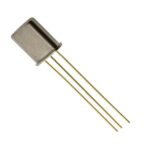 ECS-45K7.5A
The activity of extra discounts on wholesale prices is in full swing…
Please fill in your contact information and we will send you the latest wholesale price list.





