 ChipApex | Global Electronic Components Supplier

SEARCH
Search Product
Search Post
— IC芯片 | 连接器 | 传感器 | 被动器件 —
Search productSearch post
— IC芯片 | 连接器 | 传感器 | 被动器件 —
Consult the customer manager about the wholesale price.
consultation hotline:86-132-6715-2157
email:[email protected]
Contact the product manager for consultation. One-stop consultation is available.
Do you want a lower wholesale price? Please send us your inquiry and we will reply immediately.
The ECS-P145-AN is a programmable clock oscillator manufactured by ECS Inc. It operates on a 5V supply voltage with a maximum current consumption of 45mA. The device provides HCMOS output signals within a frequency range of 1MHz to 150MHz. It features a total frequency stability of ±100ppm, inclusive of temperature, voltage, and aging variations. The component is designed for operation across an industrial temperature range of -40°C to +85°C. It utilizes a standard 14-pin DIP package with four active leads, allowing for twice-programmable functionality.
Verify the specific frequency configuration during procurement, as this model supports programmable outputs between 1MHz and 150MHz. Confirm that the 5V supply requirement aligns with your system design, distinguishing it from the 3.3V ECS-P143 variant. Ensure the 14-pin DIP package matches your PCB layout constraints. Cross-reference the ±100ppm stability specification against your application's jitter tolerance requirements before finalizing orders.
Select the ECS-P145-AN when a 5V logic interface is required rather than the 3.3V P143 series. Choose this component if the design necessitates field-programmable or factory-adjustable frequencies within the 1MHz to 150MHz range. Consider this part for applications demanding ±100ppm total stability across wide thermal conditions. Verify that the through-hole 14-pin DIP form factor fits the assembly process compared to surface-mount alternatives.
This component belongs to the ECS-P143/P145 family of programmable clock oscillators. The P145 series specifically targets 5V applications, while the P143 serves 3.3V systems. Both share identical physical footprints and functional architectures, differing primarily in supply voltage specifications. This family supports diverse timing needs for IoT, medical, and industrial sectors using standard DIP packaging.
The ECS-P143-AN serves as a direct pin-compatible substitute if the system operates at 3.3V instead of 5V. Ensure the replacement maintains the required 14-pin DIP configuration. Verify that the alternative part meets the same ±100ppm stability and temperature range specifications. No other cross-model substitutes are confirmed in available documentation.
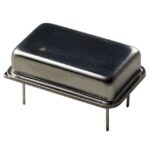 ECS-P145-AN

The activity of extra discounts on wholesale prices is in full swing…
Please fill in your contact information and we will send you the latest wholesale price list.





