 ChipApex | Global Electronic Components Supplier

SEARCH
Search Product
Search Post
— IC芯片 | 连接器 | 传感器 | 被动器件 —
Search productSearch post
— IC芯片 | 连接器 | 传感器 | 被动器件 —
Consult the customer manager about the wholesale price.
consultation hotline:86-132-6715-2157
email:[email protected]
Contact the product manager for consultation. One-stop consultation is available.
Do you want a lower wholesale price? Please send us your inquiry and we will reply immediately.
The ECS-P145-B is a programmable HCMOS clock oscillator manufactured by ECS Inc. It operates on a single 5V supply and features a full-size 14-DIP metal can package with four mounting leads. The device supports a frequency range of 1MHz to 150MHz, with total frequency stability specified at ±50ppm. It includes tri-state output control for enable/disable functionality. The component is designed for through-hole mounting and functions within an operating temperature range of 0°C to 70°C.
Verify that the specific frequency requirement matches the available programming options, as this model requires custom frequency configuration during ordering. Confirm that the 5V supply voltage aligns with the target system design. Ensure the through-hole DIP package dimensions fit the PCB layout constraints. Check for RoHS compliance status if environmental regulations apply to the final assembly. Validate the operating temperature range against the intended application environment.
Select this component when a programmable HCMOS oscillator is required with a 5V supply voltage. Consider the ±50ppm stability specification for timing accuracy needs. Evaluate the 14-DIP package size against available board space. Compare the 1MHz to 150MHz frequency range against system requirements. Assess the tri-state feature necessity for power management or bus isolation purposes.
The ECS-P145-B belongs to the ECS-P145 series of programmable oscillators from ECS Inc. This family offers customizable frequency outputs in standard DIP packages. The P145 variant specifically utilizes a 5V supply, distinguishing it from lower voltage counterparts like the P143 series. These components are designed for reliable clock distribution in industrial and commercial electronics.
Direct substitutes include other models within the ECS-P145 series offering compatible voltage and package types. Verify pinout compatibility and electrical specifications before substitution. Cross-reference frequency ranges and stability metrics to ensure functional equivalence. Consult manufacturer documentation for approved alternative part numbers.
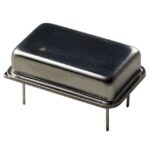 ECS-P145-B

The activity of extra discounts on wholesale prices is in full swing…
Please fill in your contact information and we will send you the latest wholesale price list.





