ChipApex | Global Electronic Components Supplier

SEARCH
Search Product
Search Post
— IC芯片 | 连接器 | 传感器 | 被动器件 —
Search productSearch post
— IC芯片 | 连接器 | 传感器 | 被动器件 —
Consult the customer manager about the wholesale price.
consultation hotline:86-132-6715-2157
email:[email protected]
Contact the product manager for consultation. One-stop consultation is available.
Do you want a lower wholesale price? Please send us your inquiry and we will reply immediately.
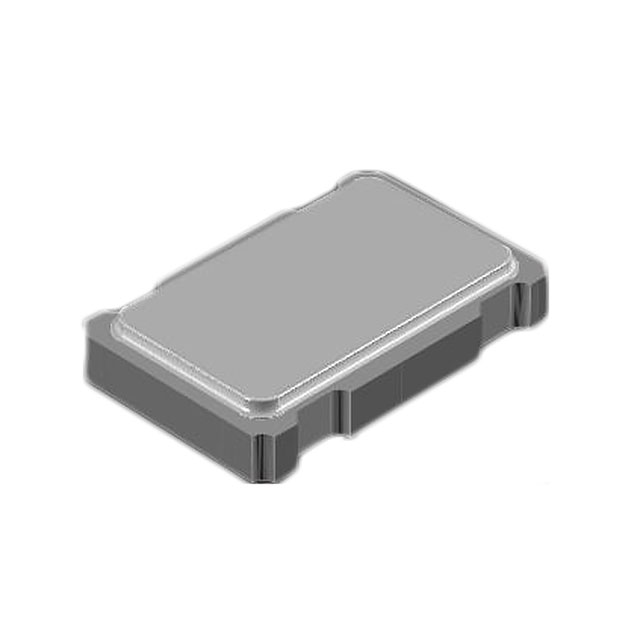
The ECS-P53-BN is a programmable HCMOS crystal oscillator manufactured by ECS Inc. It operates within a frequency range of 1MHz to 125MHz and requires a 3.3V supply voltage. The device features a total frequency stability of ±50ppm and supports enable/disable functionality. It is designed for surface mount installation in a compact 4-SMD, no-lead package. The component is rated for an operating temperature range of -40°C to +85°C and has a maximum supply current of 30mA.
Verify the specific frequency configuration required for your application against the manufacturer's programming guidelines. Confirm that the 3.3V supply voltage aligns with your system design constraints. Ensure the 4-SMD package dimensions fit within your PCB layout specifications. Check RoHS compliance status if environmental regulations apply to your manufacturing process. Validate the ±50ppm stability meets your system timing requirements.
Select this component when a programmable HCMOS oscillator is needed for commercial temperature environments. Consider the 3.3V supply requirement and 30mA maximum current draw during power budgeting. The 4-SMD package offers a compact solution for space-constrained designs. Evaluate the ±50ppm frequency stability against your system's jitter tolerance. Ensure the 1MHz to 125MHz range covers your target clock frequency needs.
This part belongs to the ECS-P53 series of programmable oscillators from ECS Inc. The series provides flexible clock generation solutions for various digital applications. The P53 series is characterized by its small form factor and standard HCMOS outputs. It serves as a direct replacement for fixed-frequency oscillators where programmability adds design flexibility.
Direct substitutes must match the 4-SMD no-lead package and 3.3V HCMOS specification. Verify that alternative parts support the same ±50ppm stability and -40°C to +85°C temperature range. Ensure the replacement oscillator offers comparable enable/disable functionality. Check for pin-to-pin compatibility to simplify PCB redesign efforts.
 ECS-P53-BN

The activity of extra discounts on wholesale prices is in full swing…
Please fill in your contact information and we will send you the latest wholesale price list.